This summer, the 2026 World Cup — the largest in history — kicks off across the United States, Canada, and Mexico: 48 teams, more than 100 matches, and a projected 6 billion people watching. FIFA expects the tournament to generate an unprecedented $13 billion in revenue.
For 39 days, the world's attention locks onto the 48 nations. One of them is Côte d'Ivoire, where Evidence Action is beginning its newest work this year. The other ten countries where we work aren't on the field — but they're where more attention could do the most good.
Côte d'Ivoire: the country we'll see on the field
Of the eleven countries where Evidence Action works, one made it to the 2026 World Cup: Côte d'Ivoire. It's also where we're starting something new.
This year, we launched Syphilis-Free Start in Côte d'Ivoire, where we expect to reach 3.6 million pregnant women and prevent more than 17,000 adverse birth outcomes over the next five years.
Every year, over 390,000 babies suffer severe outcomes because of congenital syphilis — including 150,000 stillbirths, 70,000 neonatal deaths, and 170,000 preterm births and severe disabilities. Syphilis passed from mother to child kills more babies than pediatric HIV, yet receives only a fraction of the funding.
Congenital syphilis is one of the last remaining "low-hanging fruits" in global health. Prevention is simple, cheap, and proven:
- Screen: Dual HIV/syphilis rapid diagnostic tests now cost just $0.84 — adding pennies to the cost of HIV screening that's already happening in prenatal clinics. The test delivers results in minutes.
- Treat: A single shot of benzathine penicillin, costing less than $0.50, prevents over 80% of adverse birth outcomes when administered before the third trimester.
- Scale through existing infrastructure: In most high-burden countries, over 80% of pregnant women already attend antenatal care and are tested for HIV. Switching to a dual test requires no new infrastructure, just training, supply chain support, and system integration.
So while the Ivory Coast team is on the world stage, a pregnant woman in Abidjan can walk into a clinic, get tested and treated, and deliver a healthy baby. Both are happening this summer.
Talent is everywhere, but opportunity isn't
Sports economists who study national-team performance consistently reach the same finding: a country's wealth and development track how its team does.
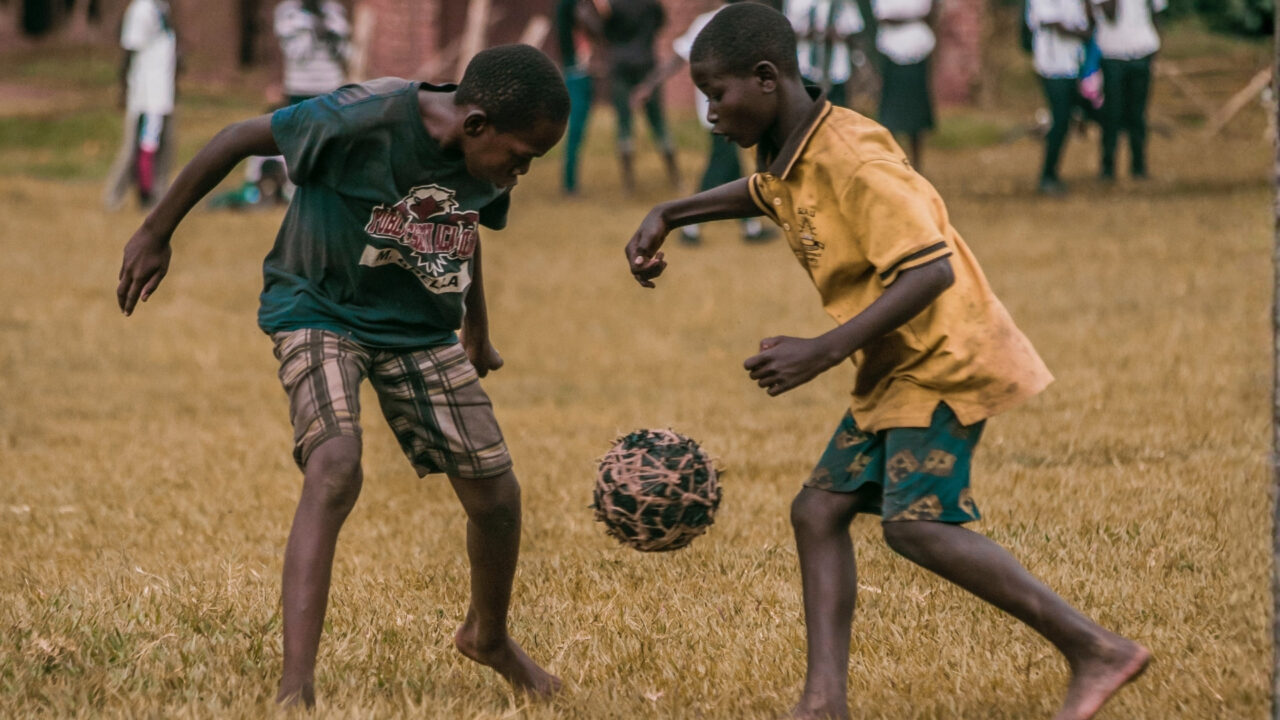
Talent doesn't favor richer nations, but the conditions to develop it do. A country's wealth shapes everything from coaching to facilities to whether a promising kid is healthy enough to train at all. The same development gap that keeps a team off the field shows up in other measures, too: child mortality, disease burden, lives within reach of a cheap intervention.
Nearly a quarter of the players at this tournament were born somewhere other than the country they represent, and many of them trace back to the places that never qualified.
A child born in Côte d'Ivoire is at this World Cup, playing for England. One born in Zambia is here for the Netherlands. Two born in Cameroon line up for Switzerland. George Weah, raised in a Monrovia slum, became the best player in the world and later Liberia's president, but never reached a World Cup. His son Timothy, raised in the United States, is at this one in an American shirt.
The countries themselves see it too. Tanzania's soccer federation is using this year's FIFA match windows to scout players of Tanzanian descent who grew up abroad, knowing many of the country's most promising players left young in search of opportunities they couldn't find at home.
The talent was always there. What a child needs to develop it — good coaching, yes, but first good health and a fair start — is what's distributed unevenly.
A fair start, everywhere
We can't redraw the bracket. But we can change the conditions that decide whether a child grows up healthy enough to chase anything at all — a place on a team, a classroom, a full life.
Proven health solutions that could save millions of lives already exist and cost almost nothing to deliver. What's often missing is the capacity to deliver them at scale.
Evidence Action bridges that gap. We partner with governments across Africa and Asia to take the world’s most cost-effective health interventions off the shelf and into the hands of the people who need them.
The tournament ends in 39 days, but the need doesn't. This summer, you can help Evidence Action provide a fair start to hundreds of millions of people living in poverty.