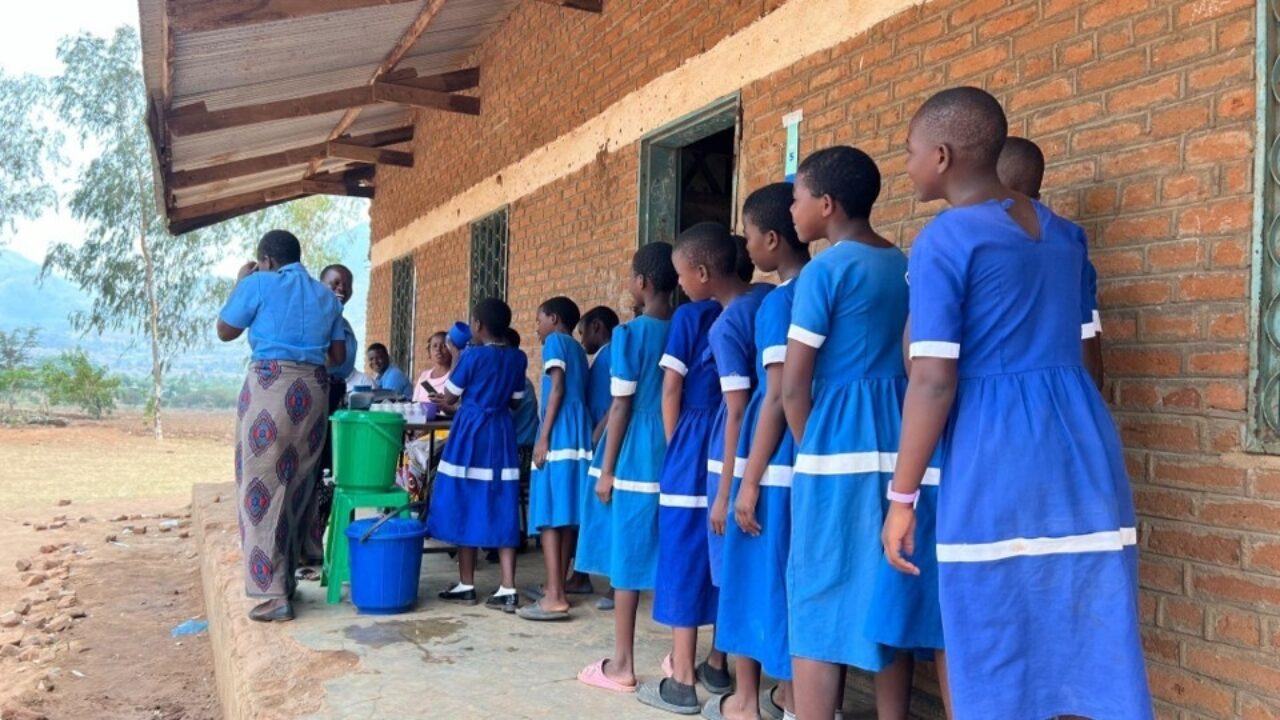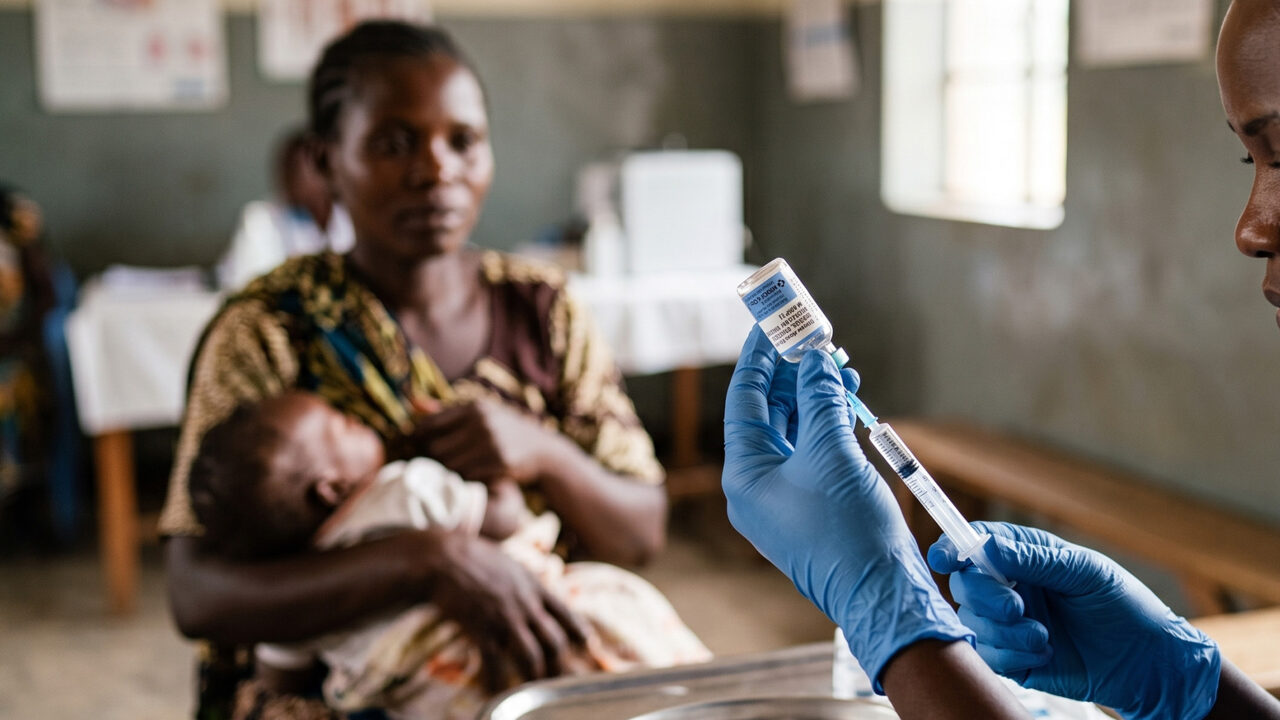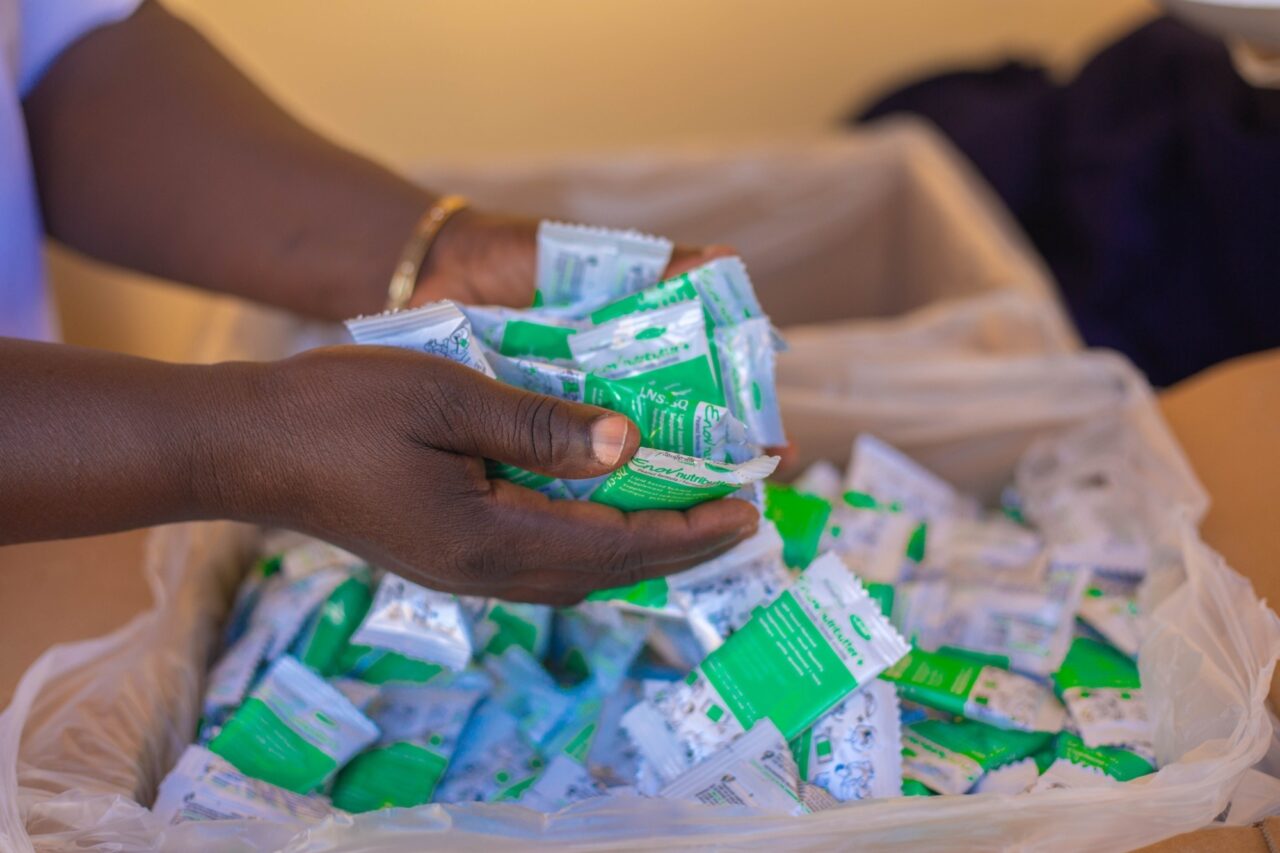
Every Wednesday at a primary healthcare center in Jos North, Nigeria, nursing mothers line up with babies strapped to their backs, waiting for a small sachet of nutrient-dense paste. One mother describes her baby crawling and holding objects for the first time. Another watches her child — once tiny and frail — gain strength week by week.
What’s in the sachet is fortified peanut butter paste: a small-quantity lipid-based nutrient supplement, or SQ-LNS. This distribution in Plateau State, funded by the state government, is an early glimpse of what the paste can do when the product reaches children who need it. The harder question is what it takes to do this across a country of 10 million children under two.
Those first two years are the window that matters most. Undernutrition before a child’s second birthday damages growth and brain development in ways that later feeding cannot undo. Nigeria carries one of the highest burdens in the world: 40% of children under five are stunted, 8% are wasted, and more than one in 10 children die before their fifth birthday.
SQ-LNS is among the most promising tools available to change that. A 2025 meta-analysis found the packets can prevent nearly one in four child deaths1 in high-burden settings alongside meaningful reductions in stunting, wasting, and anemia. In November 2023 the World Health Organization issued guidelines recommending SQ-LNS in certain contexts. Innovations for Poverty Action, after reviewing hundreds of studies, named it a "best bet." The World Bank's 2024 Investment Framework for Nutrition placed it among the highest-priority interventions for further investment.
But a promising intervention is not yet one that can deliver results. Governments and implementing partners still don’t have a gold-standard approach for cost-effective delivery at scale. So when the Nigerian government, in partnership with the World Bank and the Child Nutrition Fund, committed to procuring around $30 million of SQ-LNS, we saw a critical question embedded in a historic opportunity: how much more could this money do if the products it procured went to the children most likely to die without them?
By directing SQ-LNS to the children at greatest risk, and working to ensure that those children receive their full course of supplementation, we estimate our technical assistance will save 3,000 additional lives.
The cost-effectiveness puzzle
Nigeria's malnutrition burden is not spread evenly. Ten million children under two face very different levels of risk depending on where they are born, so distributing supplements uniformly means sending the same amount of help to places that need very different amounts of it. National surveys already showed that northern states carry a disproportionate share — Jigawa's under-five mortality rate is 16%, against a national rate of 11%. What the surveys could not show is the variation within states.
The $30 million procurement, significant as it is, would reach less than 10% of Nigeria’s eligible children if distributed evenly across all 27 states.
The question was never whether to target the supplements, but how. We believed that directing supply to about 2,200 of the highest-burden wards across 24 states could make a meaningful difference in lives saved.
What if we could target more precisely?
We worked with modelers at the Australian National University to estimate under-five mortality and stunting prevalence across Nigeria — not at the state level, but ward by ward. A ward is roughly the size of a U.S. municipality: a level of detail national surveys are not designed to produce. Within a single state like Bauchi, the resulting map is mottled, not uniform — risk concentrated in some wards and much lower in others a short drive away.
Then we built an allocation tool from scratch, combining those ward-level estimates with health surveys and government population data to generate distribution recommendations. Working with the Federal Ministry of Health, UNICEF, and the World Bank, we turned that into an allocation plan that prioritizes the highest-burden wards while incorporating partner input on state-level priorities.
The logic is straightforward: concentrate more supply where risk is higher, and the health gain per sachet goes up. Our current best estimate is that targeting SQ-LNS to high-burden wards in northern Nigeria, combined with support to get children through the full course, could avert a disability adjusted life year — one year of healthy life that would otherwise be lost to illness or early death — for around $350, compared with the counterfactual of roughly $1,200. That is a 70% reduction in cost per DALY averted, from the same product and the same $30 million.
Why we moved fast
The government's procurement commitment was unprecedented, and the Federal Ministry of Health was committed to targeting by impact. But the ward-level data needed to guide that targeting didn't exist, and operational planning at the state level was still in its early stages. From supporting Nigeria's deworming and prenatal vitamin (multiple micronutrient supplements) programs, we knew what strong state-level partner support does for operational planning, supply chain management, and monitoring.
Rollouts of this scale everywhere face the same challenge: supply can move faster than the systems that put it to use. When product arrives ahead of health worker training and ward-level distribution planning, a child receives one or two months of supplementation instead of the intended six, resulting in a significant loss of the expected benefit
So we moved before the funding was in place, deploying unrestricted resources to begin work while we pursued a grant. The window to shape distribution planning was narrow, and the potential return on a relatively modest investment was extraordinary.
What we're doing — and what it means for children
In partnership with the government, we're supporting the allocation and delivery of SQ-LNS to roughly 2,200 wards across 24 states, most of them in northern Nigeria. With targeting and delivery support in place, we estimate approximately 3.3 million children will receive a full course of supplementation by early 2028 — around 70,000 years of healthy life that would otherwise be lost.
With the distribution plan now finalized, our focus is on ensuring that children targeted by the plan are actually reached – and that they receive and consume the full six months of SQ-LNS. We're providing delivery support in nine priority states that will receive roughly 75% of the allocation. Our work spans health worker training, supply chain monitoring, and robust monitoring and evaluation.
To put this in perspective: without strategic targeting and delivery support, we estimate the procurement would save approximately 1,200 lives. With them, roughly 4,200.2 The difference isn't more product. It's the same product, reaching the children most in need, for the full six months.
Roughly 40% of the gain comes from targeting through the modeling and the allocation tool. The rest comes from the work that follows: the trainings, the supply chain protocols, the spot checks that confirm a first batch actually arrived. Good targeting without good delivery is a better-drawn map of children we still miss.
We will know how well this worked because we are measuring it. In April 2026 we completed a baseline household survey across 5,040 households in 48 wards in Bauchi and Plateau states, with an endline to follow.
Why this matters beyond Nigeria
Nigeria is one of the first countries to undertake a major government-led SQ-LNS rollout, and how it goes could shape whether and how other high-burden countries follow. The approach we're testing — using model-based geostatistics to target a proven intervention to the children who need it most, delivered through government health systems — has the potential to become a replicable model.
But the most encouraging signal isn't in our own numbers. Nigeria's National Council on Health has formally recommended the allocation tool. 24 State Nutrition Officers have been trained on the tool. And five states and the FCT are now using it to allocate cartons they bought with their own money. That is the kind of government ownership that outlasts any single program, and it is the outcome we care most about.
It's exactly the kind of result our Accelerator — the engine we use to find and scale the next generation of cost-effective health programs — was built to produce. And it won't be the last.