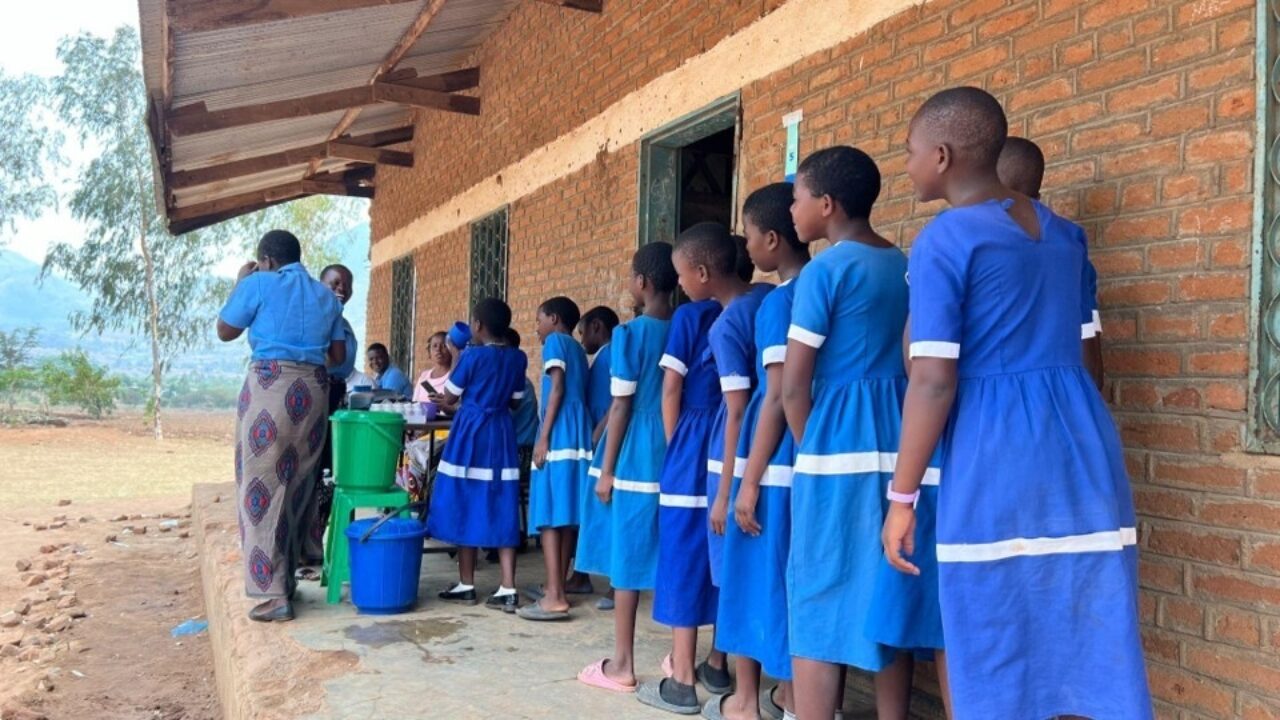
Once a week at schools across Malawi, the lessons stop for a few minutes and the girls line up. At the front of the line, one teacher hands each girl a small tablet and watches to be sure it’s swallowed, while another runs a finger down a register and marks against the girl’s name. The whole thing takes the time of a short recess.
For every five of the girls lining up, the odds are that two are anemic – though you would be unlikely to notice. Anemia isn’t a condition that announces itself. Instead of a fever or a rash, there’s a girl who tires early or drifts during a lesson. She might complain of weakness, exhaustion, headaches, or dizziness, only to be told she’s lazy.
Anemia doesn't make headlines and it rarely kills (though it does contribute to high maternal morbidity, which we’re tackling with prenatal supplements for pregnant women in Nigeria). But over the years when the brain is still being built, that steady drag on energy and concentration limits how much a girl learns and how far she gets in school and in life.
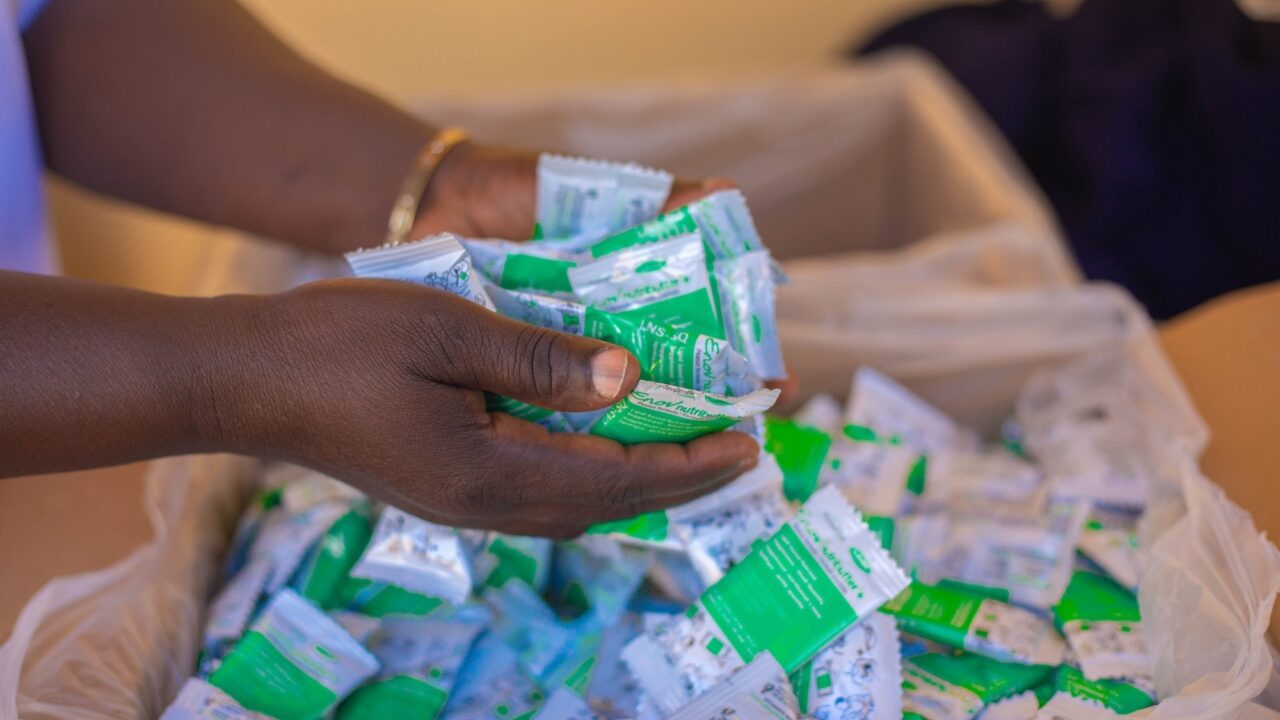
The remedy is simple and costs pennies: a weekly iron and folic acid (IFA) tablet, the same one moving down that line of girls each week in Malawi. The supplements can reduce the risk of anemia in children aged 10-19 by 56%, and meta-analyses link iron supplementation to an average increase of 4.6 IQ points in anemic children.
The challenge has never been whether IFA supplementation works. It's whether it can be delivered consistently to millions of children, every week, through existing government systems, at a cost that makes it one of the best uses of limited health resources. That's the question the Government of Malawi set out to answer in late 2024 to scale IFA supplementation (alongside deworming) starting with adolescent girls across seven (out of 28) districts with support from Evidence Action.
We commissioned the first coverage survey in June 2025, which provided a more rigorous preview of progress outside our routine program reporting: In a given month, approximately 54% of girls received at least one tablet, but only 19% received the full recommended dose (i.e 4 or more tablets). Another 28% of girls received at least two tablets.
From a standing start in under two years, getting more than half of girls a tablet is meaningful progress. We're not failing to reach girls in Malawi, but we’re not yet reaching them consistently — and the reasons appear to be largely operational. A supply gap. A teacher pulled away by exams. A distribution day that slipped. Alongside them sits a quieter challenge, building demand for a supplement that treats a condition most families can't see.
Here are four lessons we’ve learned in the program’s first 18 months of IFA supplementation in Malawi, and how we’re using them to reach coverage targets as it expands to new districts.
We expected the hardest part to be the human factors: getting teachers trained, getting families familiar with a weekly supplement for a condition you can't see or feel. So we invested in training, community meetings, and awareness campaigns.
That groundwork has paid off. We found that 99% of teachers and 93% of enrolled girls know about the program, and teachers know the correct dose (98%) and how often to give it (97%). Knowing about the program however isn’t the same as understanding why it matters, and that deeper understanding is taking longer to build (more on that below).
What we hadn't expected was that the binding constraint would turn out to be something more basic: the tablets themselves.
Over half of schools reported running out at some point in the previous three months. And "running out" isn't a one-day gap. When a school's supply was exhausted, the next delivery took an average of 27 days to arrive. In Mzimba South, it took 45 — more than six weeks in which a girl could walk into school every single week and still leave with nothing. The problem wasn't only absence: in a handful of schools, enumerators found tablets that had sat so long they'd expired — supply that arrived, but never reached a single girl in time.
We had designed delivery around frequent, small drop-offs, on the belief that schools couldn't safely store more than a few weeks' worth of tablets at a time. Conversations with government partners during the supply chain redesign suggested otherwise, and that opened the door to a different model: deliveries three times a year, each carrying enough supply for the school term, timed to training sessions and review meetings when everyone is already gathered. Alongside it, we're spreading resupply across more than one delivery route and building reporting that flags a shortage before it becomes a six-week gap.
When designing the program, national data suggested roughly 40% of adolescent girls aged 10–19 were out of school. That estimate shaped a significant piece of the IFA program design: a dedicated community delivery platform using Health Surveillance Assistants (HSAs) to reach these girls in their homes and communities. However, the program has not found as many out-of-school girls as we’d expected.
The coverage survey was designed to interview 460 out-of-school adolescent girls across seven districts, but our monitoring partner could only find 142 in the selected households. Parents surveyed reported that 93% of their adolescent daughters were enrolled, while 69% of the interviewed HSAs reported zero out-of-school girls in their catchment areas.
The census data may have overstated the out-of-school population or enrollment rates may have risen since the 2018 census, and we along with our government partners no longer believe continued outreach to this population sub-group makes sense from a cost-effectiveness perspective.
This is an example of something we talk about a lot at Evidence Action: letting data change your plans, even when it means acknowledging your initial assumptions were wrong. In collaboration with the Government of Malawi's National Task Force, we decided to pause the community platform and redirect those resources to school-based delivery, where the overwhelming majority of girls are and where the program is far more cost-effective. We're now working with the government on alternative, lower cost approaches to reach adolescent girls, — like inviting them to health facilities to receive IFA tablets.
Knowing how the program works is one thing; knowing why it matters is another. One of the more sobering findings from the survey: awareness of the program is generally high, especially for teachers, enrolled girls, and health workers, but awareness of the reason for it is not. Ninety-three percent of enrolled girls are aware of the IFA program. However, only 25% of aware girls and 20% of aware parents can name anemia prevention as one of the reasons why.
This matters because anemia is a condition that most people don't know they have. Unlike other diseases where you may see physical evidence of infection like fever or pain, anemia manifests as persistent tiredness, difficulty concentrating, and feeling weak. Symptoms that children and families often accept as normal.
Community refusal was one of the top three barriers reported by teachers, alongside supply shortages and competing demands on their time. Twenty percent of schools that didn't distribute tablets in the past month cited lack of parental consent as a reason.
The government is expanding community sensitization, with our support, through radio messaging, community meetings, and engagement with local influencers, and is working to reframe the conversation to build enough community demand to sustain the program over time.
Malawi isn't the first place we've done this work. Since 2019, we've supported governments across five Indian states to strengthen the systems that deliver IFA at scale, and today that program reaches some 34 million children and adolescents with iron supplements — about 26 million of them with their full course. It's the closest thing we have to a model for what school-based supplementation can become, but comparing across contexts is challenging.
In India, Evidence Action entered a context where the government already had an IFA supplementation mandate, an existing cadre of trained health workers distributing tablets, and established supply chains — all of which needed to be strengthened, but none of which needed to be created. Our technical assistance helped a functioning system perform better.
In Malawi, the starting point was different, though not empty. The government had already committed to anemia control policy and was addressing it on a small scale with support from another partner. Malawi’s national deworming program contributed its own foundation: existing school platform trained teachers, and a rhythm of treatment to build on. But shifting from a small program in a few districts to a national program meant a new routine to establish in every classroom, a new product to procure and move, and a new supply chain to keep stocked throughout the school year.
This distinction shapes what sustainability looks like. In India, we're beginning a phased transition toward state-level advisory support, with full government ownership possible by 2030. In Malawi, the program is still in scale-up mode. Sustainability here will require not just building government capacity, but identifying financing mechanisms for IFA commodities and generating enough community demand that the program can become country-led rather than an externally supported initiative.
What comes next in Malawi
The program is expanding as we learn, carrying each lesson into the next set of districts rather than waiting for a finished playbook.
The adolescent-girl supplementation that began in seven districts has been expanding to more each year, with the aim of eventually reaching every girl across the country. In parallel, we piloted IFA for younger school-age children — boys and girls alike — in two districts, testing whether the same school-based model works for a group with similar anemia rates, and the government has endorsed expanding it. Each step adds children, and each one tests whether the delivery system can stretch to meet them.
We're also implementing, with the Ministry of Health, baseline and follow-up anemia surveys in areas the program hasn't yet reached — the first large-scale measurement of its kind in Malawi, and the first real step toward answering the question that matters most: whether all of this is translating into fewer anemic children. There's strong evidence for iron supplementation from clinical trials, but little from a nationwide program delivered at this scale — which is exactly the evidence governments and funders look for before they invest.
Building a nationwide weekly supplementation program through a low-income country's own school system is not simple, but it’s exactly the kind of delivery problem Evidence Action helps governments solve. We know the intervention works. Together with the Government of Malawi, we're learning, in real time, how to make the delivery work too.