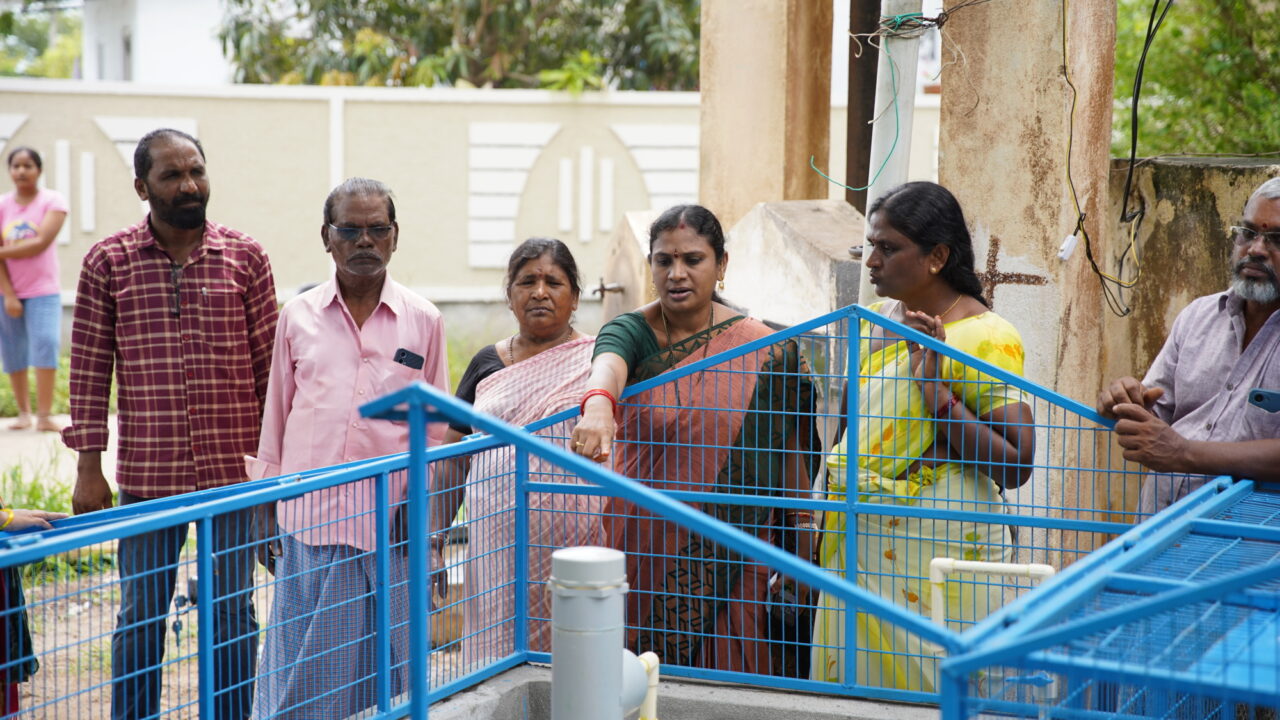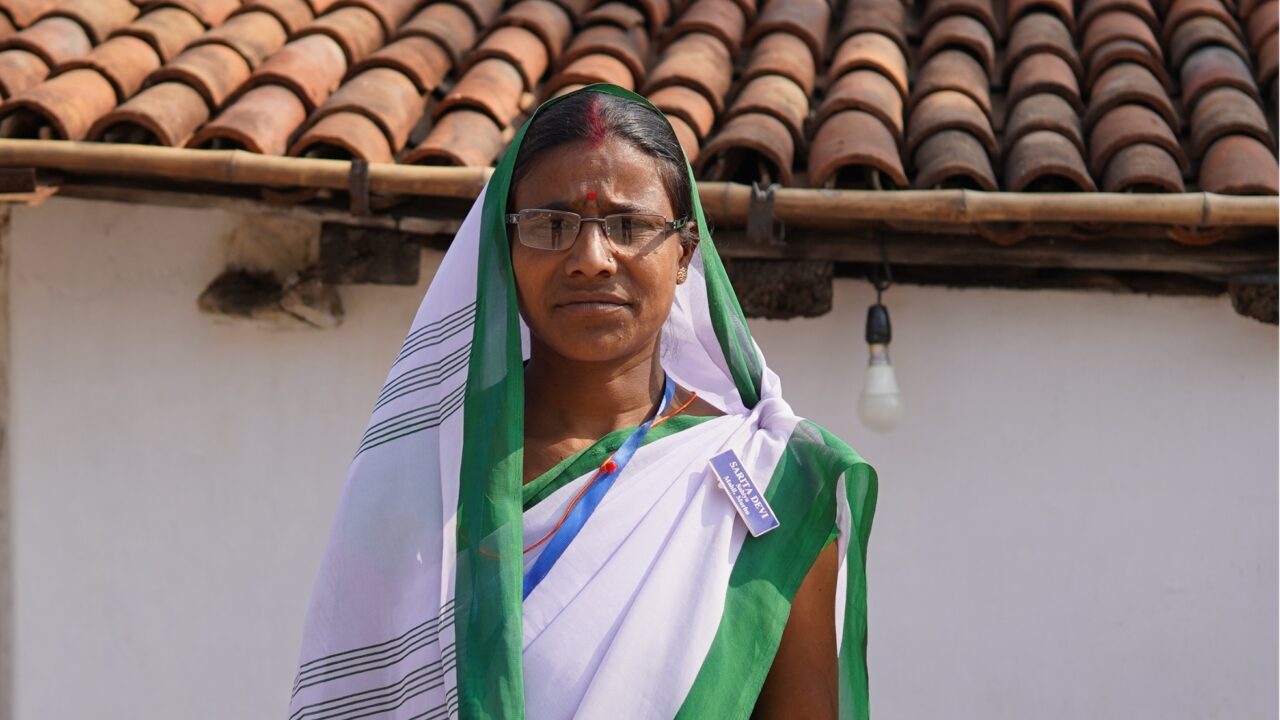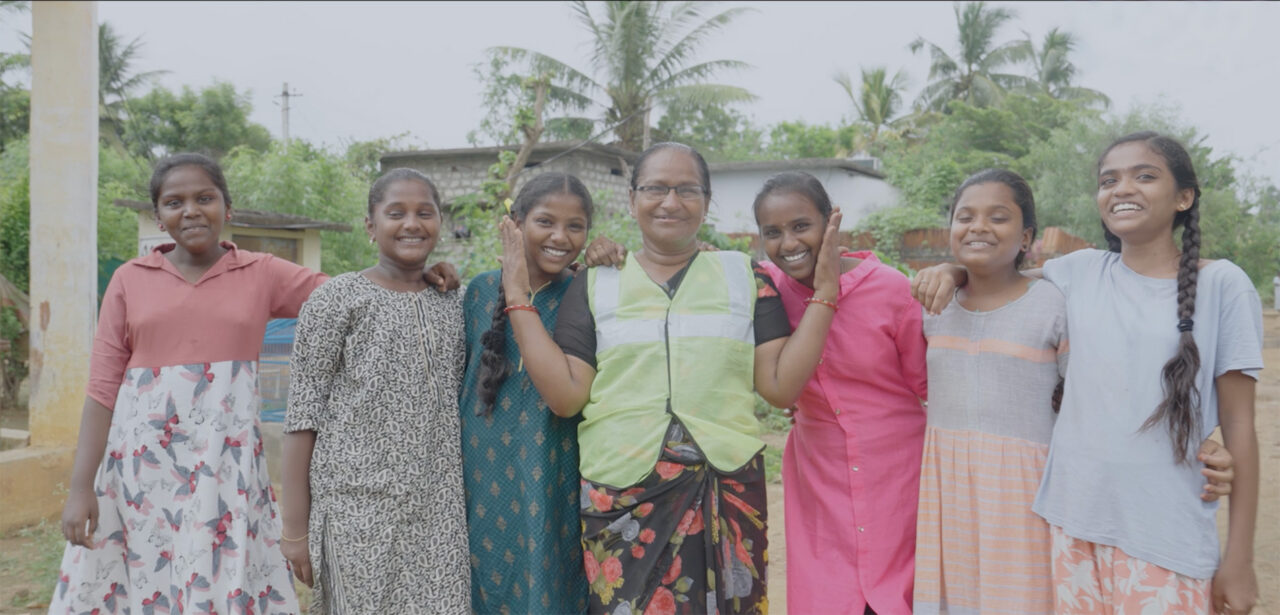
We recently announced decisionsto decrease the footprint of some of our chlorine dispenser programs in parts of East Africa to ensure our investments in safe water are having the most impact possible. Safe water remains central to our work, and we will continue reaching millions of people through in-line chlorination and chlorine dispensers. This International Women's Day, meet three of the women behind this work.
Women and girls spend an estimated 250 million hours every day collecting water. In 7 out of 10 households without running water, it's girls who carry the load. But across Evidence Action's Safe Water Now program, women are also leading the work of making that water safe.
Meet Dorothy in Kenya, Agatha in Uganda, and Bhavani in India: an engineer climbing tanks to test chlorine levels, a mechanical technician assembling devices in the warehouse, and a village operator who traded a bucket of bleaching powder and 25 dangerous stairs for a system that treats water before it ever reaches a tap.
In male-dominated roles, they're not just delivering safe water. They're redefining who does.
Keeping it flowing: the story of Bhavani
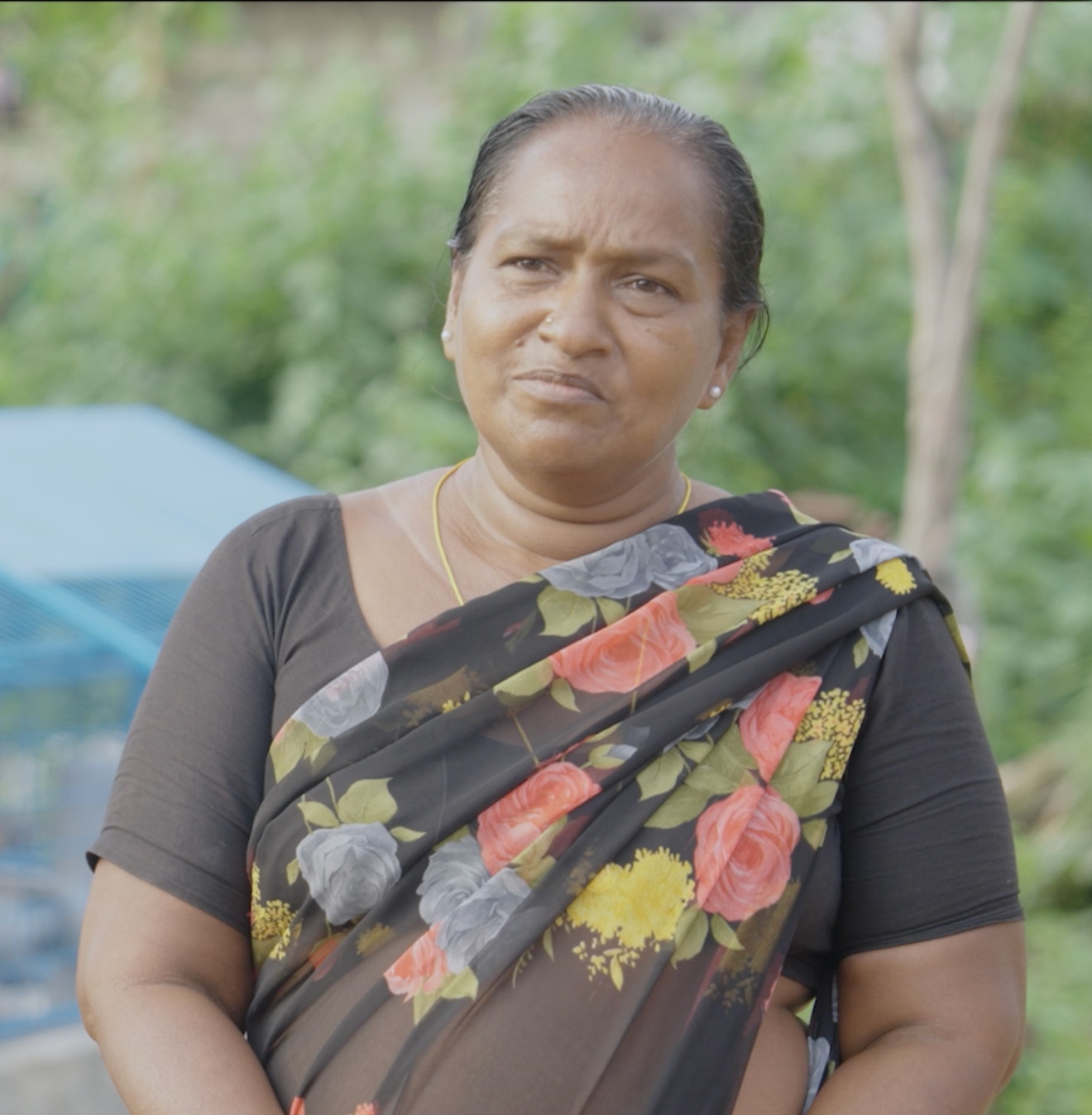
Before a family draws water from their household tap, someone has already ensured it is safe. That someone is Bhavani — working under the guidance of the Rural Water Supply & Sanitation Department and India's National Jal Jeevan Mission.
Like many pump operators across Andhra Pradesh, Bhavani knows what it meant to treat water the old way. Before the in-line chlorination (ILC) device was installed in Enamadala, disinfection meant hauling bleaching powder up steep stairs to pour it manually into the overhead tank — a process that was physically exhausting, hazardous, and repeated every 15 days.
Across the program, women operators have described the danger of carrying heavy loads up broken steps, a task that was as inconsistent in its results as it was grueling in practice. Research from Evidence Action's implementation trial in Odisha confirms the broader pattern: in 92% of households, women bear primary responsibility for treating drinking water.
That changed when a tablet-based in-line chlorination device was installed in the village. The ILC system — a simple, low-cost device constructed from PVC piping with no moving parts and no electricity requirement — automatically doses chlorine into the water as it flows through the village pipeline. For Bhavani, operating the system means stopping the motor, checking the device, refilling the chlorine tablets, and restarting the motor. The water flows from the pumps through the device, into the tanks, and on to every household.
"Water comes to us through the device from pumps and tanks to all households," she explains. The results speak in the language that matters most to her: health.
That confidence is grounded in evidence. The randomized controlled trial of in-line chlorination conducted by Evidence Action and J-PAL in Odisha found that ILC reduced E. coli in household tap water by 70% and in stored water by 47%. It also reduced the time women spent treating water — shifting a daily burden that falls disproportionately on them.
For Bhavani, the shift is practical and personal. No more climbing stairs with bleaching powder. No more inconsistent dosing. No more watching her neighbors avoid the tank water. Now, the water is purified before it ever reaches a tap — and her community trusts it.
In Enamadala, safe water doesn't just flow from a pipe. It flows through the hands of a woman who learned to operate a new system and earned the trust of her village in the process.
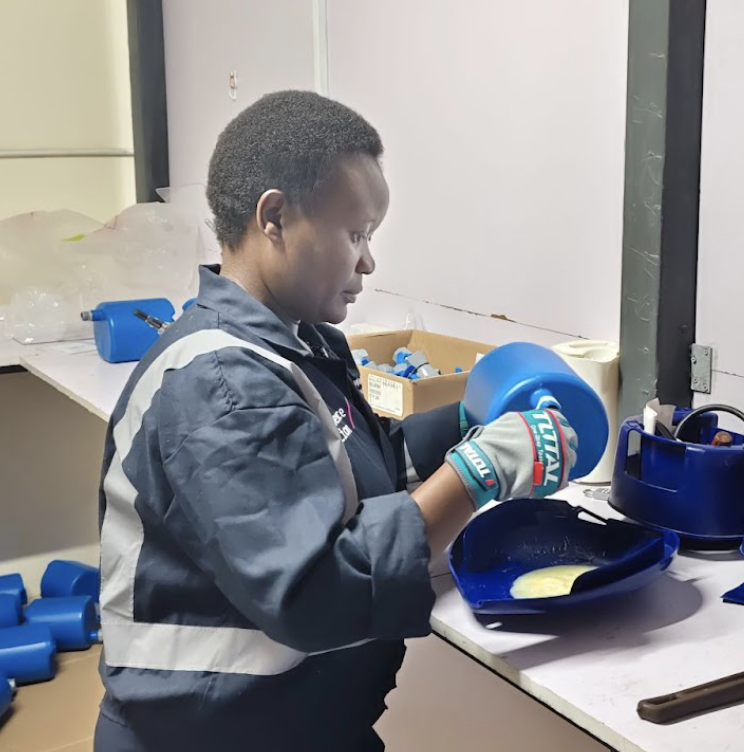
Climbing high, serving many: The story of Dorothy
Many of the women we celebrate on International Women’s Day are on stage, and some are on top of a water tank. Before a community member fills her jerrycan at a water point in Kenya, Dorothy has already climbed the tank, tested the chlorine, and confirmed the water is safe.
Dorothy, an engineering field officer for Evidence Action's Safe Water Now program in Kenya, represents exactly the kind of progress the day calls us to recognize: a woman working in a male dominated field, inspiring others, and ensuring that communities have access to safe water every day.
Dorothy's days shift between the warehouse and the field. Some are spent assembling and preparing equipment. Others take her to installation sites, and that is where the work becomes real.
"When I arrive at a site, the first thing I do is check the schedule and understand what the day requires," she says. Fieldwork means arriving with every tool accounted for, inspecting before touching anything, and committing to finish what she starts. "You cannot leave a system mid-installation, because water does not wait."
Dorothy draws a distinction that matters deeply to her: clean water and safe water are not the same thing.
"When I arrive at a new water point, the community is often already using what looks like clean water. It is clear, it looks fine. But when I test it, the chlorine levels are not there."
That's the water before the chlorination device. After installation and treatment, something shifts.
"The community starts to notice the difference. They embrace it. They choose it."
That shift extends beyond water quality. When women in the communities see Dorothy working climbing tanks, leading installations, solving faults under pressure they stop and watch. Some have returned to school to study technical courses. Others have entered similar fields.
"The motivation I give them, they carry it forward."
One moment cemented her confidence permanently. During a critical repair, a serious leak had disrupted the water supply. Facing initial doubt from others, Dorothy diagnosed and fixed the fault herself. When the water was restored and she saw the relief on the client's face:
Her mother was her first example of what is possible. "She mentored me, pushed my spirit, and showed me that what seems impossible can be made possible." Today, Dorothy carries that lesson into every community she serves and passes it on to every young woman watching.
For Dorothy, every completed installation is proof of what happens when women show up fully and communities are protected. The devices Dorothy assembles have been shipped to our teams in Malawi, Uganda, and Kenya, and to our partners in Ethiopia and Nigeria.
"If she sees me doing it," Dorothy says of the young women watching her, "she knows she can too."
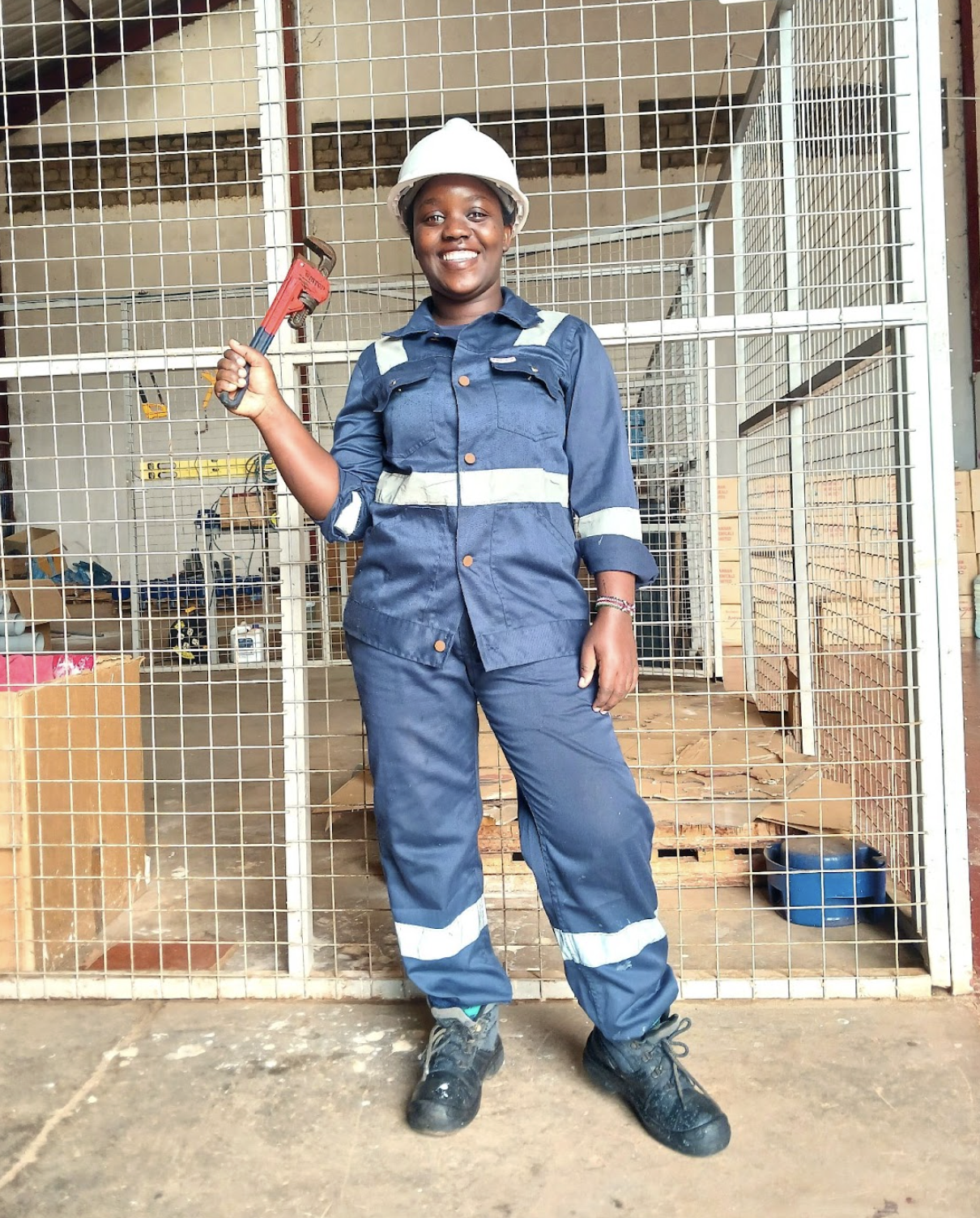
Where safe water begins: The work of Agatha
In Uganda, before a mother fills her jerrycan at a communal water point in Mbale, or a girl drinks water at her rural home in Bugiri, someone has already ensured the water is safe. That someone is Agatha Atuhaire.
Agatha is a mechanical engineering technician and an engineering officer with the Safe Water Now program at Evidence Action.
Based at the warehouse in Uganda, her work is technical and hands-on. She assembles and installs in-line chlorination devices and chlorine dispensers used for communal water chlorination. She supports field teams with maintenance and installations, receives and distributes spare parts to field offices, operates workshop machines during assemblies, and carries out chlorine testing using a pH meter to check the quality of stored chlorine.
To her, the purpose is clear: “Clean and safe water means water that is free from visible contaminants like sand, and invisible contaminants like pathogens making it suitable for human consumption.”
Communities are continuously supplied with chlorine and educated through meetings and radio talk shows on the five steps of handling and storing chlorinated water: cleaning the container, dosing, fetching, waiting 30 minutes, and drinking.
Agatha first realized the broader impact of her work in 2020 while serving as a machine operator. “I inspired other women to take up roles in male dominated work such as machine operations,” she says. Management noticed her effort, and more women were recruited into such roles.
She became Evidence Action's first female engineering officer across Uganda, Kenya, and Malawi. “This gave me a sense of equal opportunity and encouragement to work and serve the communities,” she reflects.
As the world marks International Women’s Day, Agatha reflects on what the day represents:
She has faced “stereotypes and imposter syndrome where I feel the need to work more to prove that I can manage that work,” especially during physically demanding tasks like working at height during installations.
Still, what motivates her is “recognition and appreciation of my good work by the supervisor,” which she describes as empowering, and “working to serve the communities by providing safe water… especially serving mothers.”