
Presbyopia — the age-related loss of near vision — affects 1.8 billion people worldwide. Yet close to half of those affected, an estimated 826 million people, still lack access to the simple, affordable near-vision spectacles that could restore their ability to read, work, and fully participate in daily life.
A new issue of the Community Eye Health Journal (CEHJ), published this week, explores why — and what a growing coalition of organizations, governments, and cross-sector partners are doing about it.
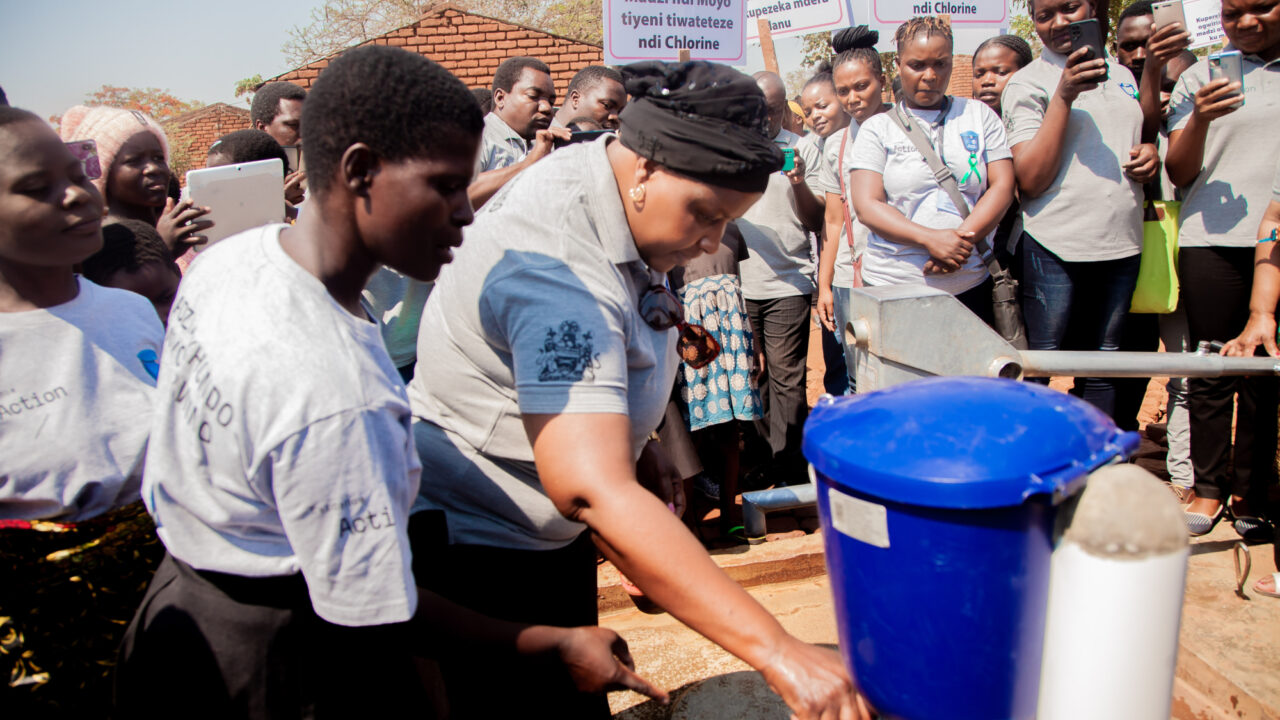
Evidence Action CEO Kanika Bahl co-authored an article in the issue, "Innovative Screening and Distribution Strategies for Presbyopia," which makes a case that no single delivery channel can close the gap on its own. Instead, the article profiles eight distinct distribution models — from pharmacies and faith-based health systems to postal workers, workplaces, solar energy companies, government pension programs, outreach camps, and existing public health programs — each reaching people that others would miss.
The workforce implications of this problem are significant. Because presbyopia typically begins around age 40, millions of people are still working and providing for their households when their near vision starts to decline. Yet many health care and eye care services operate during working hours at clinics and hospitals, making access disproportionately difficult for working adults. Cross-sector approaches that meet people where they already are — in factories, at post offices, during community health events — can overcome these barriers.
Evidence Action's Work in Uganda
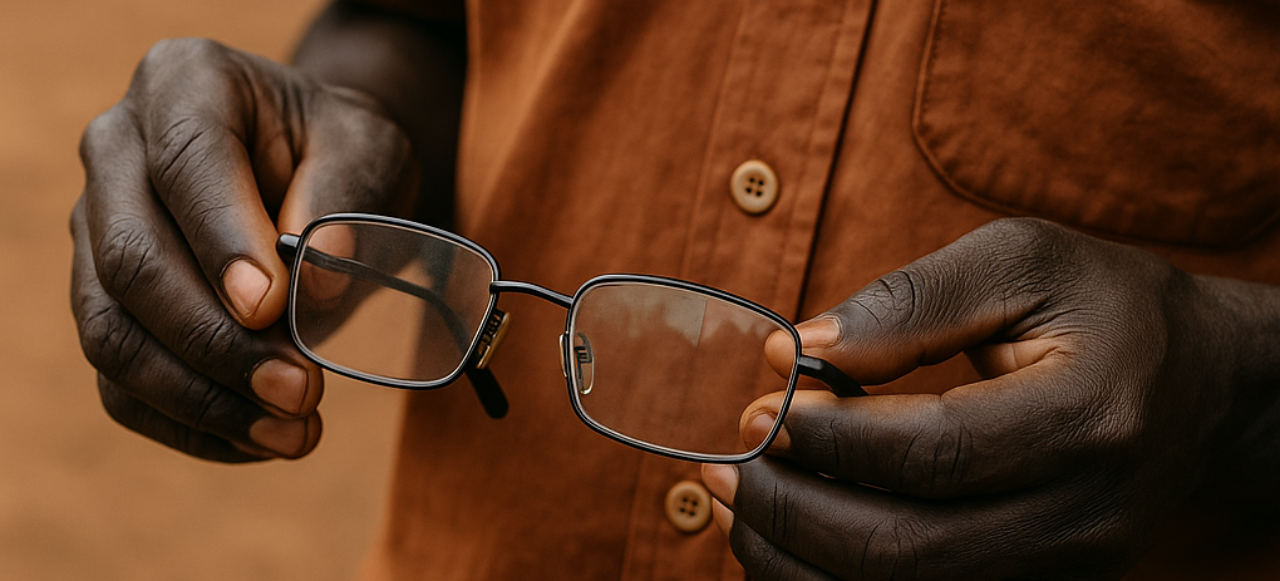
This is a challenge Evidence Action's Accelerator is tackling head-on. Our Accelerator identified reading glasses as an overlooked best buy in global health: at less than $1 per pair when purchased in bulk, reading glasses rank among the most cost-effective health interventions available, with research showing income increases of up to 33% for workers in vision-intensive jobs after receiving correction.
With support from the Livelihood Impact Fund, we are currently working with Uganda's Ministry of Health with the goal of distributing 25,000 pairs of reading glasses across two districts. We're testing two delivery models that reflect the same multi-channel philosophy highlighted in the CEHJ article:
Uganda is home to an estimated 5.5 million people with uncorrected presbyopia. Our pilot will generate the feasibility and cost-effectiveness data needed to inform decisions about scaling — potentially expanding within Uganda or testing the model in additional countries where governments support community-based vision care.
A Growing Evidence Base
The CEHJ issue arrives at a moment of building momentum. A recent Center for Global Development analysis estimates that the productivity loss from visual impairment in low- and middle-income countries totals $1.1 trillion annually — equivalent to 1.2% of combined gross national income.
Separate modeling from the Seva Foundation, Fred Hollows Foundation, and IAPB suggests that a $7.1 billion global investment over five years could reduce vision impairment by approximately 24% by 2030, generating $199 billion in productivity benefits — a return of $28 for every $1 invested.
The challenge has never been the solution. A pair of reading glasses is simple, affordable, and immediately transformative. The challenge is building the delivery systems to get them to the hundreds of millions of people who need them most. That's the work ahead — and it's work that demands exactly the kind of creative, cross-sector thinking this journal issue spotlights.