A new peer-reviewed analysis in Health Policy OPEN, co-authored by Evidence Action, traces how a decade-old diagnostic finally reached scale, and what it took to get there.
The article's headline finding: where countries adopted the dual HIV/syphilis test, syphilis testing in pregnancy rose sharply, and coordinated global action drove a ten-fold increase in the tests procured over just four years.
Liberia shows what that looked like in practice. There, the share of pregnant women tested for syphilis during antenatal care rose from 9% to 79% between 2017 and 2023. That is an 813% increase, and it narrowed the gap between HIV and syphilis testing from 57 percentage points to 12.
Behind that number is a practical problem. For years, a pregnant woman could walk into an antenatal clinic, be tested for HIV, and walk out without ever being screened for syphilis — an infection that causes more than 700,000 congenital cases worldwide each year, leading to stillbirths, newborn deaths, and lifelong disability. The test existed. The treatment — a single dose of penicillin — existed. What was missing was a way to deliver both, reliably, on the day she came in.
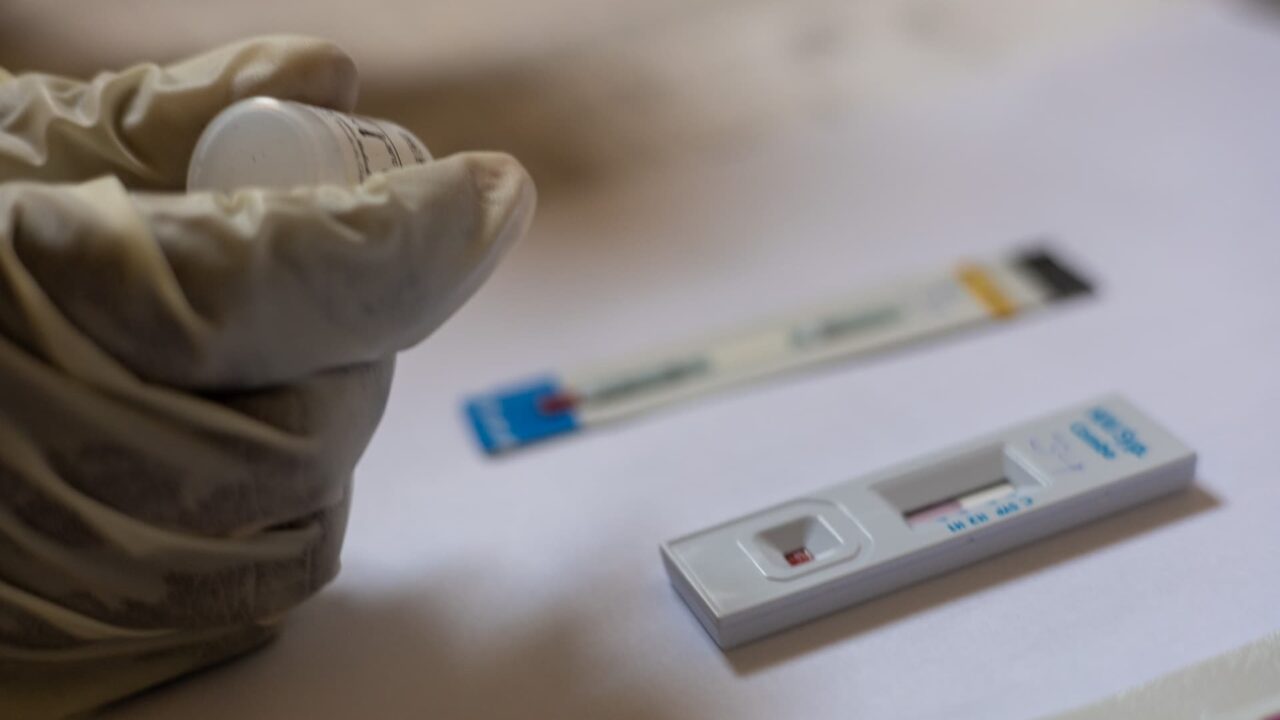
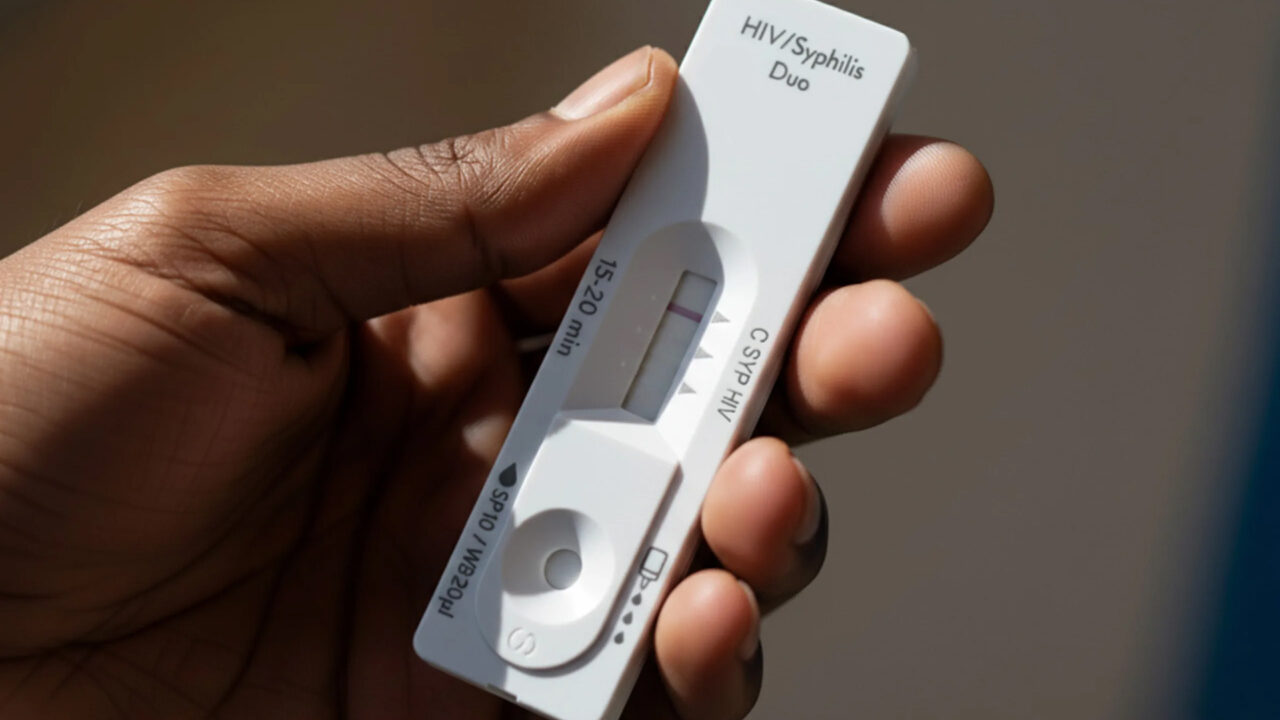
The study credits the dual HIV/syphilis rapid test as the tool that bridged that gap, and details the coordinated effort that carried it from World Health Organization prequalification in 2013 to more than 20 million tests procured in 2024 — a ten-fold increase in four years, now used in 78 countries. A 2021 agreement that brought the test under $1 for the first time was a turning point, and new work has brought it to a record-low price of $0.84.
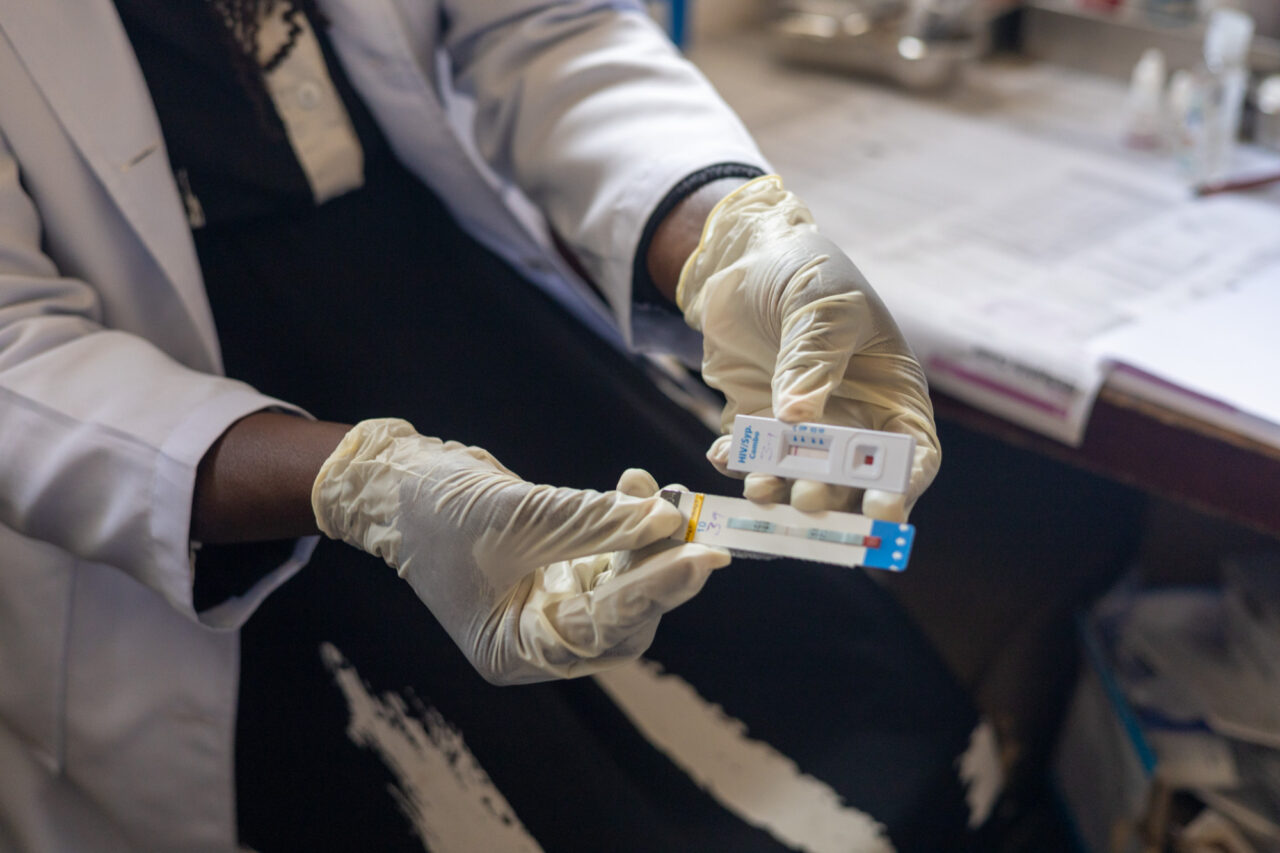
Evidence Action's contribution to the study was on the ground through Syphilis-Free Start. Working through ministries of health in Liberia, Zambia, and Cameroon, we supported governments to roll out syphilis screening and treatment across antenatal facilities. Rather than pulling health workers away for lengthy trainings, governments led training-of-trainers cascades that could equip a facility's staff in a single afternoon, followed by mentorship and supportive supervision. We paired that with supply chain support so that tests and penicillin stayed on the shelf, and helped integrate dual testing indicators into national data systems so coverage could be tracked and acted on.
The gains were shared, not solo. The study attributes Liberia's progress to government leadership, a successful feasibility pilot, and Global Fund–supported procurement of tests and penicillin, alongside our support.
The analysis is also candid about what challenges remains. Syphilis treatment still lags testing — only half of reporting countries met the target for adequately treating syphilis-positive pregnant women in 2023 — and penicillin stockouts and provider hesitation persist. Hepatitis B testing lags further still.
The lesson we take from it is simple: proven tools fail quietly when no one owns their delivery. The dual test worked because evidence, pricing, policy, and country-level execution moved together. That is the model Evidence Action is now applying to the new geographies and the next set of neglected, tractable problems.
Source: Monroe-Wise A, Maman D, Edun O, et al. "Successes and setbacks in dual HIV/syphilis test scale-up strategies: Lessons learned for testing integration in an era of declining resources." Health Policy OPEN 10 (2026) 100172 (open access, CC BY-NC-ND). Anna Konstantinova and Emilie Efronson contributed as Evidence Action co-authors.