Beyond the dose: Behavior is the next frontier in India’s fight against anemia
Evidence Action
/
A dose only works if it’s swallowed.
In India’s fight against anemia, years of work to get iron supplements reliably to schools and health workers have helped raise coverage in states like Madhya Pradesh and Uttarakhand. The next challenge is making sure those doses are actually used.Ankur Garg, Executive Vice President and India Country Director for Evidence Action, makes that case in two recent op-eds.
The next frontier is not supply alone. It is the infrastructure of behavior.
Ankur GargExecutive Vice President and India Country Director, Evidence Action, writing in Hindustan Times
The reason it’s so hard is that anemia is easy to miss. It leaves children tired, unable to concentrate, and more prone to illness, but those signs are so easily seen as normal that families rarely connect them to a missing nutrient.
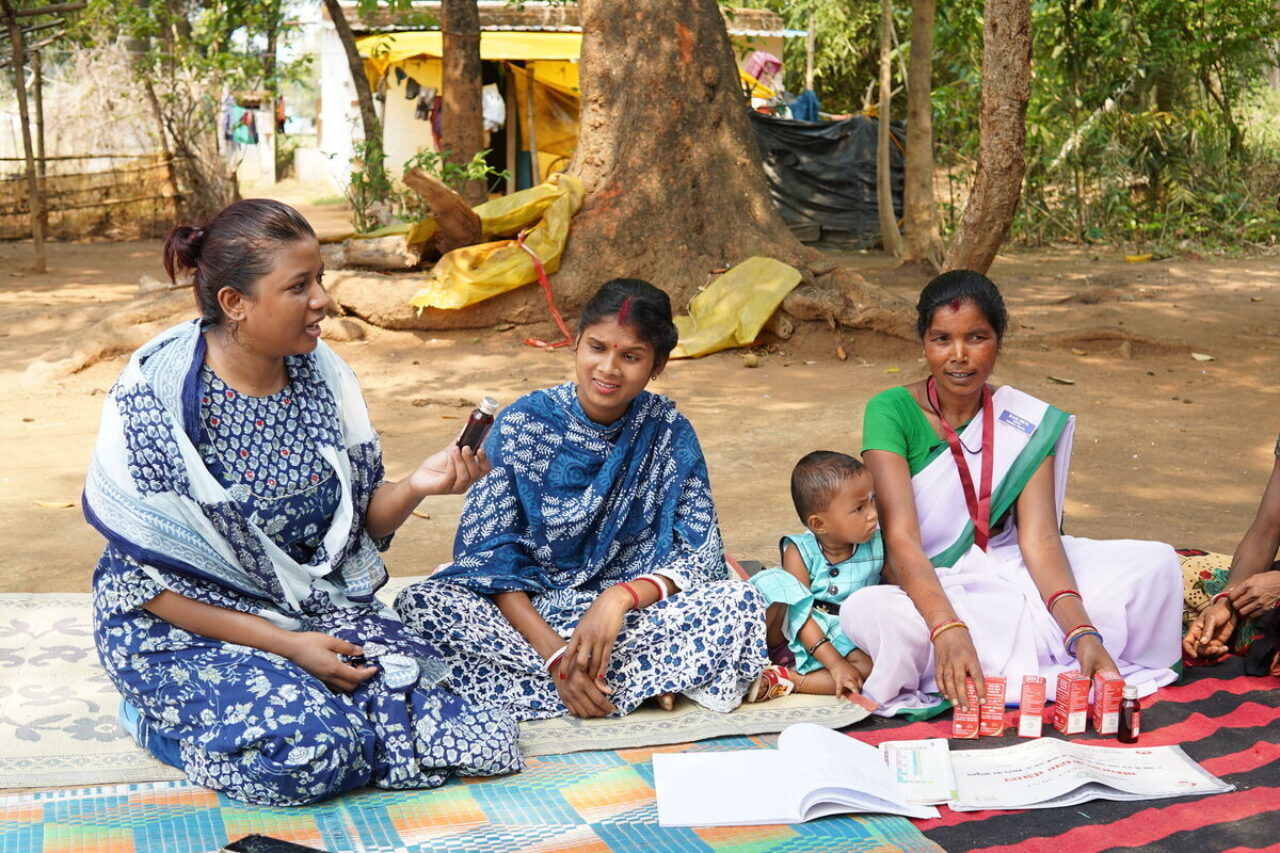
In a Hindustan Times piece, Ankur describes a frontline health worker in Uttarakhand who visited the same household three times in one month. Each time, the bottle of iron syrup she had left on her last visit was still sitting unopened on the shelf. So she explained the benefits again, answered the same questions again, and planned to come back.
A parent who can’t see the problem has little reason to open the bottle.
Our work
Reaching the youngest age group has also been about people, not pills. Syrup can reach a child through a community center, a health worker, or a parent, and our 2022 survey found that responsibility was unclear. Caregivers and those giving the syrup were often unsure of the right dose, and the advice families received was thin. We helped states spell out who is responsible for what, updated the guidance families receive, and kept contact lists current so reminders reach health workers by text and WhatsApp. We also supported states in pressing for transportation stipends for health workers, because syrup bottles are heavy, and some partner states have now approved them.
Dose
Weekly iron tablet
Who
A teacher who notices
Will a child swallow the tablet?
Read the storyClose
In the classroom
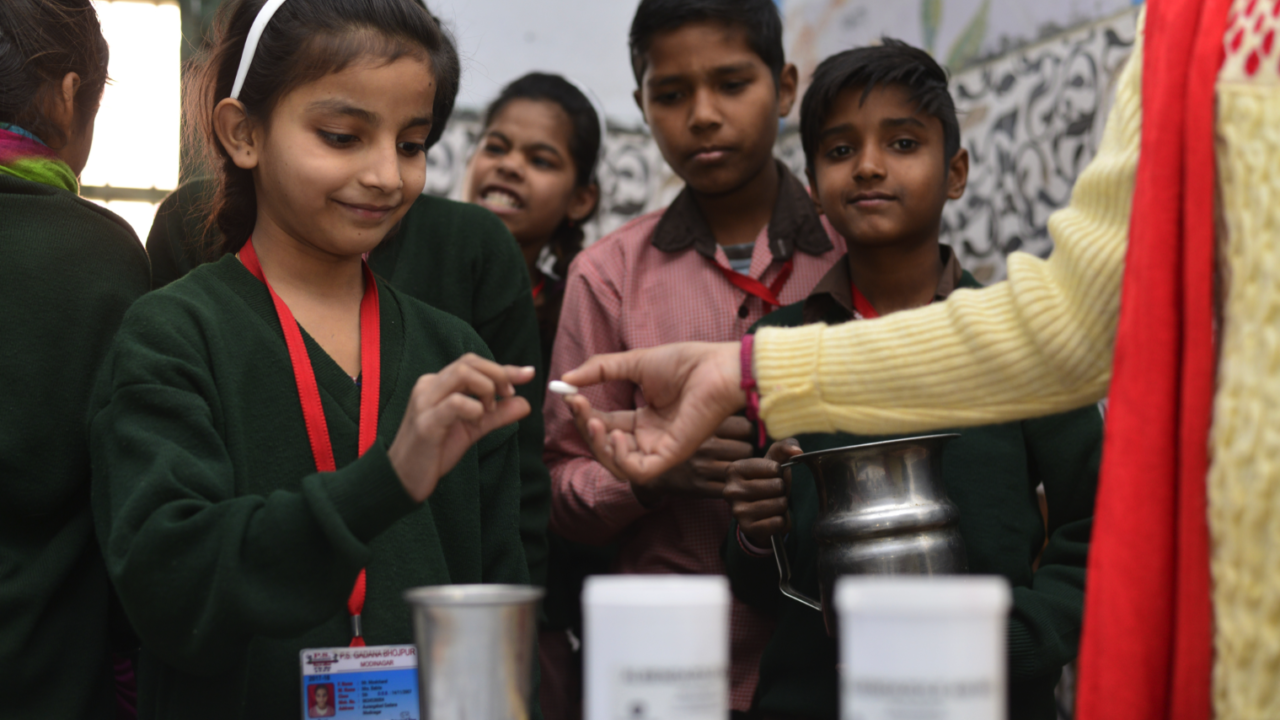
In a SugerMint op-ed, Ankur describes chemistry teacher Manju Rani at a government girls’ school in Aurangabad village, Haryana. Every week, students there are handed an iron tablet. Manju noticed some of them slipping theirs into their bags after lunch. She talked with each of them about what anemia does to their health and learning.
Today, those students take their tablets willingly.
Our work
Conversations like hers only work if teachers are ready for them. In 2022, fewer than 60% of teachers had received training on the tablets, and fewer than 40% of schools had materials explaining why they matter.
We supported government efforts to close that gap with training calendars, reminders, and posters and videos made with states for children and adolescents. We also helped states set one fixed day each week for distribution, and coordinated text reminders to teachers on that day.
The progress shows up in both the government’s national scorecard, where the Anemia Mukt Bharat index rose from 38.7 in 2020-21 to 71.2 in 2025-26, and our own endline results, where full coverage more than doubled between 2022 and 2024 for both school-age children and children under 5.
Anemia prevention in India
National score, 2020-21 to 2025-26
Anemia Mukt Bharat (AMB) Index38.7% →71.2%
2020-212025-26
Full IFA coverage, 2022 vs. 2024
2022 baseline2024 endline
School-age children (5–19)
202230%
202465%
Children under 5
202221%
202443%
No single step produced these results. Ankur credits many layers working together inside government systems, held together by people: the frontline worker in Uttarakhand who planned to come back, and the teacher in Haryana who noticed a tablet in a school bag.