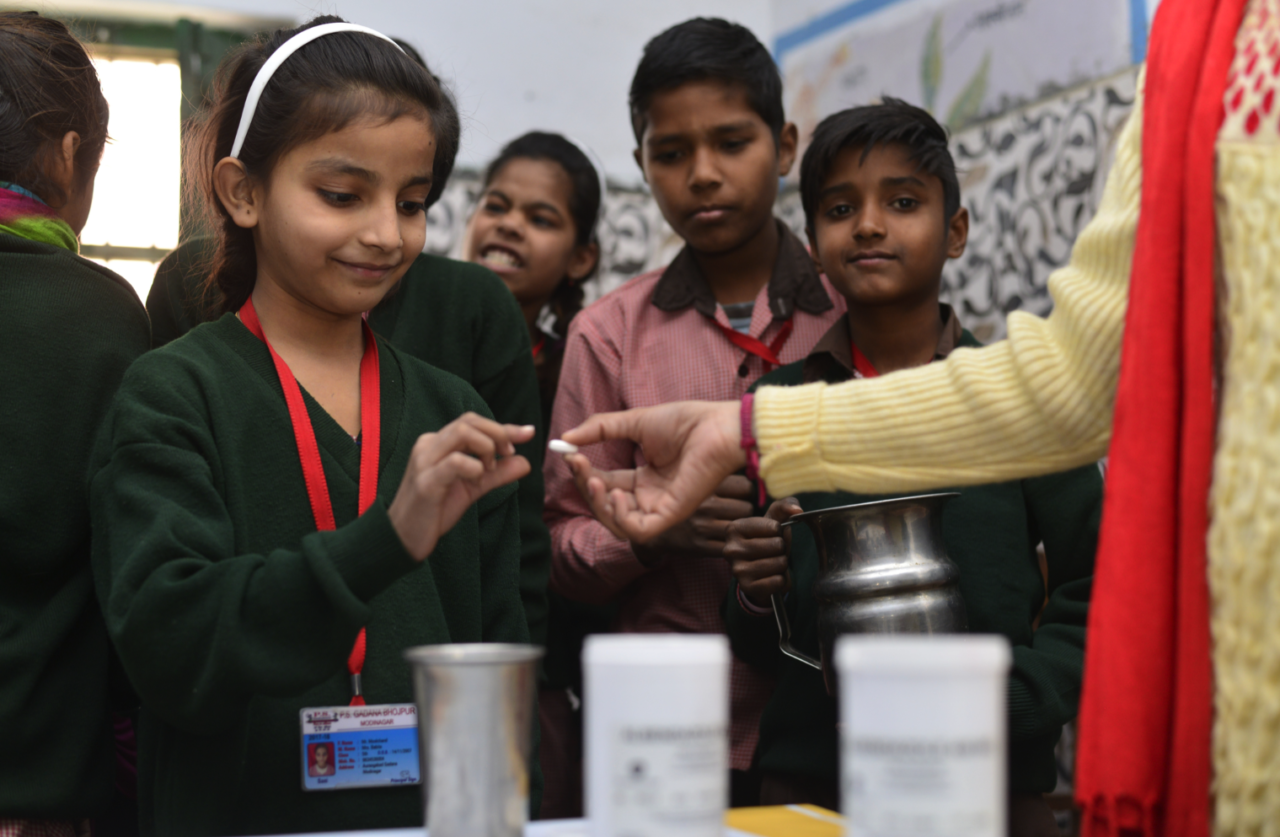
Twice a year, in February and August, a teacher hands a child a single tablet of albendazole. It takes less than a minute. Multiplied across India, that moment adds up to one of the largest public health programs in the world.
In a Sept. 2, 2026, column for ET Edge Insights, Ankur Garg, Executive Vice President and India Country Director for Evidence Action, looks back on how India's National Deworming Day grew from a three-state pilot into a national program.
The need is large. According to World Health Organization estimates cited in the piece, around 333 million children under 14 in India are at risk of soil-transmitted helminth (STH) infections, roughly 38% of the global at-risk population. Heavy infections cause malnutrition and weakness, and they keep children out of school.
These parasitic worm infections are the focus of our Deworm the World program, which has supported government systems in delivering more than 2.4 billion treatments.
National Deworming Day, led by the Ministry of Health and Family Welfare, now reaches more than 300 million children annually. In the column, Ankur shares three lessons from the past decade of deworming: