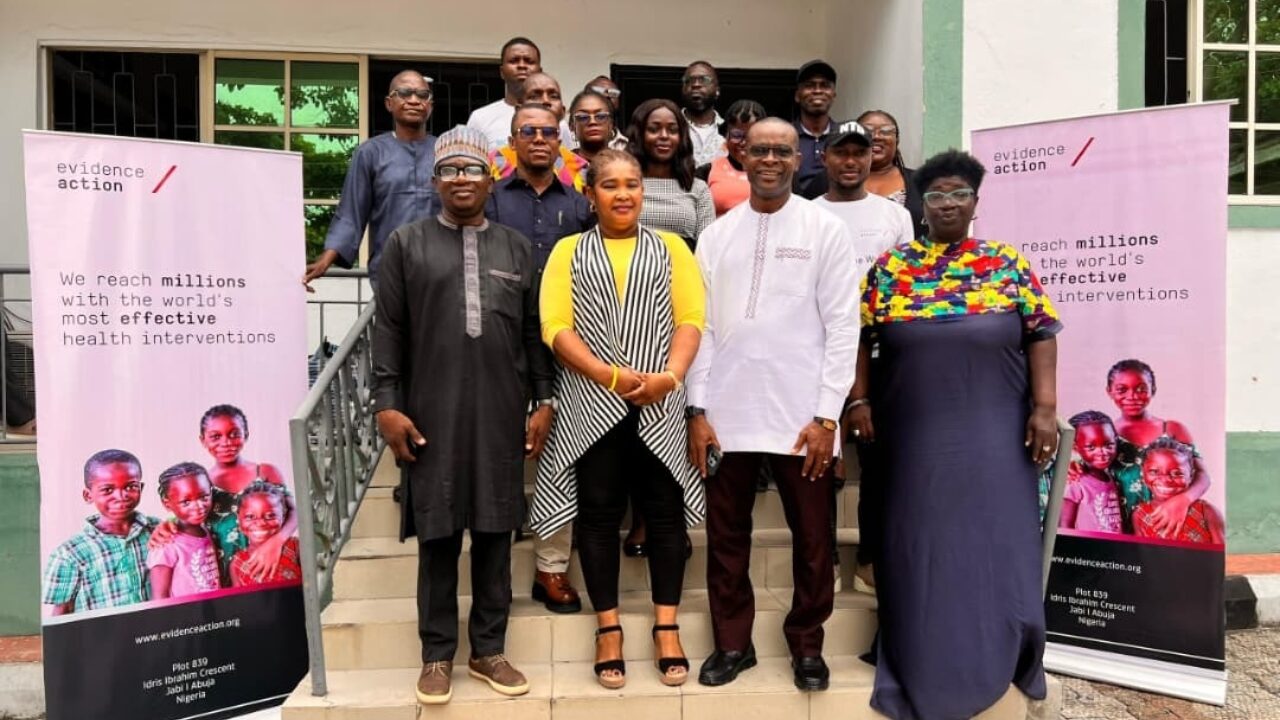
Nigeria is bracing for what humanitarian analysts are calling the most severe lean season on record, a food and nutrition crisis that puts Evidence Action's work in the country at the center of an urgent response.
The United Nations Office for the Coordination of Humanitarian Affairs has issued a warning: nearly 35 million people in Nigeria are expected to face acute food insecurity during the 2026 lean season, the annual window between planting and harvest, running June through August, when food stocks are lowest and prices are highest.
The hardest hit will be children. Across northern Nigeria, an estimated 6.4 million children are expected to be acutely malnourished this year. Roughly one million of them — children under five in Borno, Adamawa, and Yobe states — will face life-threatening severe acute malnutrition.
Reaching children in the highest-risk window
Children under 2 are at the center of this crisis. The first 1,000 days of a child’s life are a developmental window when the brain and body are growing fastest, and when malnutrition can do damage that cannot be undone later.
A nutrient-dense paste known as small-quantity lipid nutrient supplements (SQ-LNS) can be used to supplement the diets of children 6-23 months old who are at risk of undernutrition. Evidence shows that this intervention substantially reduces malnutrition and can prevent nearly one in four child deaths in high-burden settings.
The Nigerian government has procured more than 650,000 cartons of the product, a $30 million investment that is expected to reach more than 3 million children with six months of supplementation. Evidence Action is working alongside the Ministry of Health to target supplies to the highest-burden wards where children are most at risk of undernutrition. We are also supporting health worker training, last mile delivery, supportive supervision, and monitoring & evaluation to ensure that as many children as possible receive their entire course of supplementation.
With targeted delivery support, we estimate the lives of around 4,000 children under two will be saved — more than double what the procurement alone would achieve.
Supporting pregnant women through – and beyond – the crisis
Nigeria accounted for more than a quarter of all maternal deaths worldwide in 2023, approximately 75,000 women. When food prices spike and diets compress, the risks that drive those deaths — anemia, low birthweight, preterm birth — compound.
Multiple micronutrient supplementation (MMS) provides 15 vitamins and minerals during pregnancy to fill the gaps a restricted diet leaves open. Evidence shows MMS prevents approximately 70% of maternal anemia cases, and compared with standard iron and folic acid supplementation alone, reduces stillbirths by 9%, low birthweight by 12%, and babies born small for gestational age by 8%.
Getting MMS consistently into the hands of pregnant women attending government antenatal care is where the delivery challenge remains. In a pilot across 90 government clinics in Nigeria, we tested whether targeted changes to how and when supplements are distributed — combined with reinforced health worker training — could improve how reliably a woman receives and takes MMS across her pregnancy. That work is informing how we're now scaling MMS through government antenatal care systems nationwide.
The longer view
Evidence Action's Equal Vitamin Access program addresses nutritional vulnerability at three life stages where the evidence is strongest: SQ-LNS for children in their first two years, MMS for pregnant women, and iron and folic acid supplementation for adolescents.
The goal isn't only to meet the 2026 lean season, it's to build the delivery infrastructure that reaches families through this one – and every one that follows.