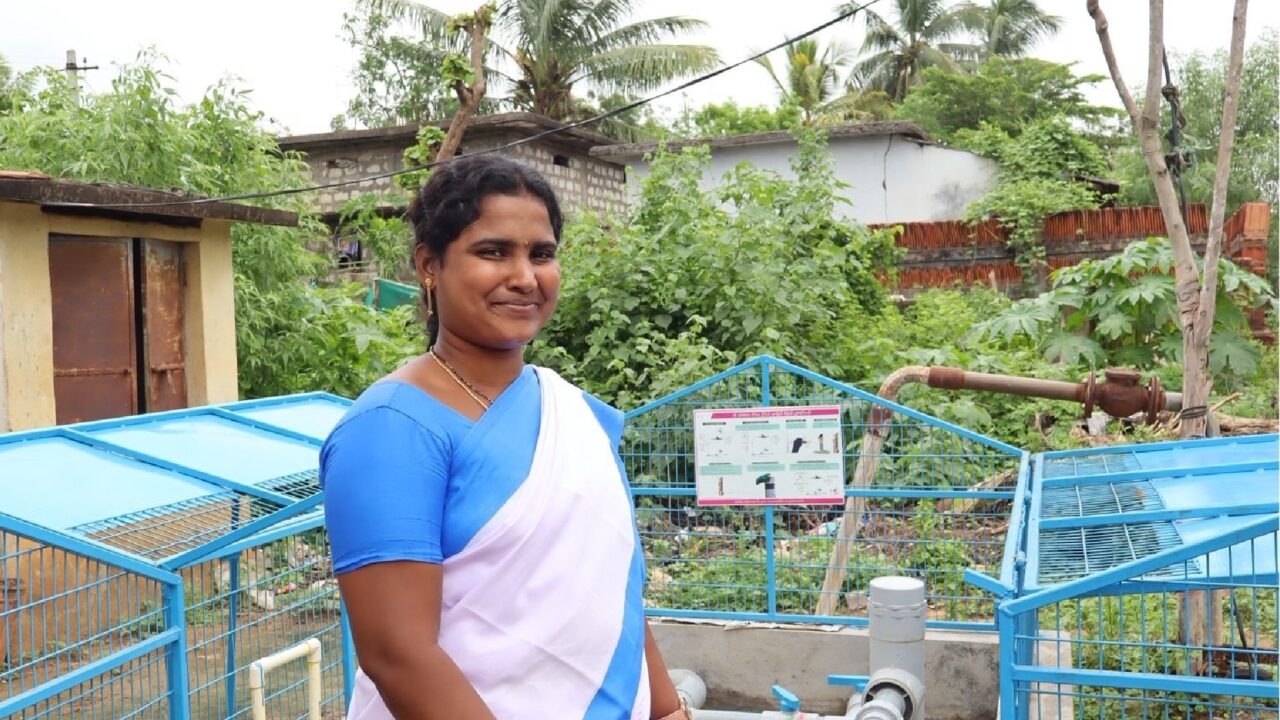
For fifteen years, Bhavani climbed an overhead water tank in Enamadala village every two weeks, mixed bleaching powder by hand, and poured it into the supply her neighbors would drink. There was no way to measure how much chlorine ended up in the water, and for a few cycles it was the wrong amount. About three in ten households in her village trusted the tank enough to drink from it. The rest bought water, boiled it, or took their chances.
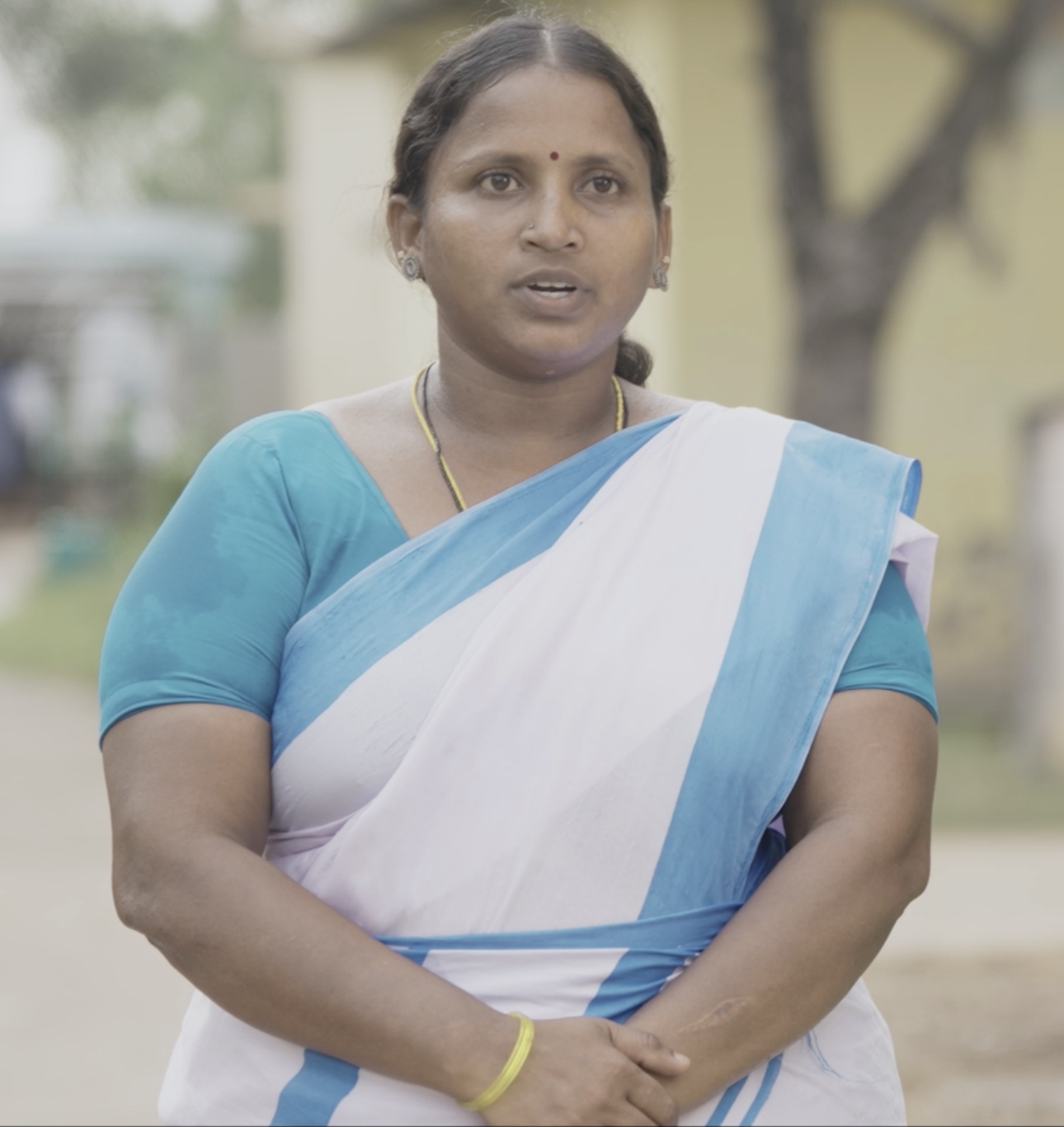
Bhavani still runs the water system in Enamadala, but she no longer climbs the tank and her neighbors have given her a new name: Chlorine Bhavani. The difference is a small device installed inside the pipeline — and a great deal of patient work to convince a community that water which smells faintly of chlorine is finally safe to drink.
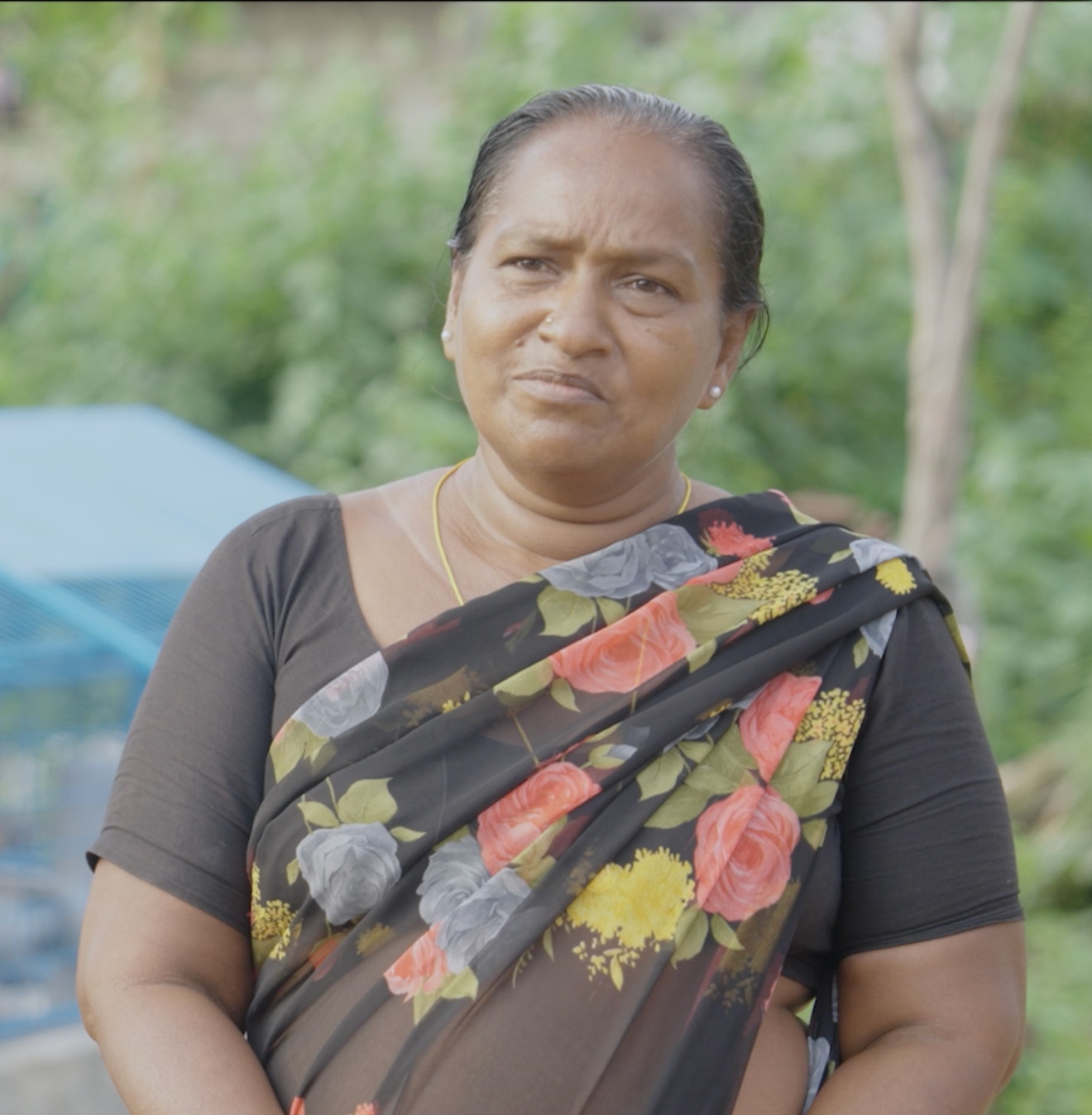
"Now, with the in-line chlorination device, the process is easier, safer, and more effective. Safe drinking water reaches the community, and I have received full support in operating and managing the system."
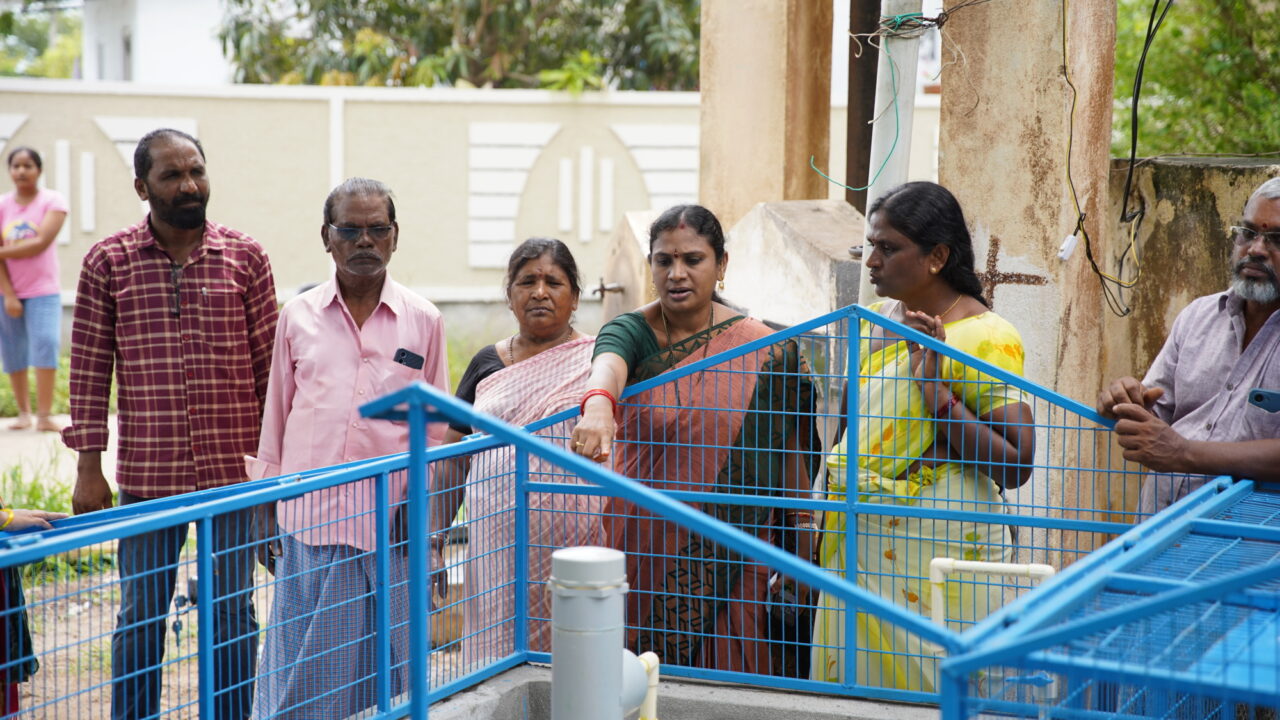
On June 5, the Rural Water Supply & Sanitation (RWS&S) Department of the Government of Andhra Pradesh, with Evidence Action — which works in India through its technical partner EAII Advisors — brought stories like Bhavani's into the same room as the engineers and officials who decide how an entire state gets its water.
At the State Conclave on Safe Water Through In-Line Chlorination in Vijayawada, the Indian state committed, publicly and at senior levels of government, to scaling in-line chlorination across all feasible village water systems under Jal Jeevan Mission 2.0.
Working under the RWS&S Department's guidance, Evidence Action already supports the scale-up across ten districts within Andhra Pradesh. In partnership with the department, we will install around 400 in-line chlorination devices across the state, while the state develops a roadmap to scale chlorination across all feasible Single Village Schemes.
The gap hiding inside a success story
Since 2019, the national Jal Jeevan Mission has connected more than 150 million households to a tap, representing one of the largest rural water infrastructure investments ever undertaken. For families who once walked hours to collect water, the tap changes daily life.
Tap access and water safety, while related, are not the same thing. An "improved water source" is designed to reduce contamination risk, but safe drinking water requires more than that. It requires reliable quality at the point of use. Waterborne pathogens can enter distribution systems at multiple points, and diarrheal disease remains a leading cause of death in children under five. Reaching the household is a critical first step. Ensuring the water that arrives is safe to drink is the next.
In-line chlorination systems are designed to close that gap, sitting inside the pipeline and releasing chlorine as water flows past. It replaces the inconsistent practice of hand-mixing bleaching powder, often with a tablet-based approach that doses at the source. The dose isn't perfectly uniform — it varies with water flow and depends on the tablets being refilled on schedule — but it brings treatment closer to consistent, measurable, and reliable than the manual methods it replaces.
A meta-analysis led by Nobel laureate Michael Kremer and colleagues found that water chlorination can reduce under-five child mortality by about 20%, demonstrating its potential as one of the most cost-effective health interventions available.
What the conclave committed to
Under the RWS&S Department's leadership, officials, engineers, researchers, and community members worked through pertinent questions that determine whether safe water reaches a glass: policy, financing, procurement, operations, and maintenance.
In his keynote, Shri B. Hare Ram Naik, Chief Engineer and Project Director of the RWS&S Department, set the direction: "Through in-line chlorination, Andhra Pradesh is strengthening its commitment to ensuring safe and chlorinated drinking water for every household under JJM 2.0."
Shri K. Venkata Krishna, Officer on Special Duty to the Deputy Chief Minister, framed it in practical terms: "Every habitation needs a clear roadmap for safe drinking water," noting that the RWS&S and Panchayat Raj & Rural Development departments have committed to mobilizing local, mandal, and state systems to act on those plans.
Shri Manoj Kumar M., State Program Lead for the Evidence Action’s India safe water program, named the gap plainly: "Access to water alone does not protect a family from waterborne diseases. What protects them is water that is safe, reliable, and trusted every single day." He was equally clear that there is no single answer; approaches have to be tailored to local conditions and owned by state systems.
Several concrete things came out of the day. The state released Safe Water that Transforms Lives, a compendium of the operators and community members who run and use these systems, and recognized the frontline "Safe Water Warriors" behind them.
Officials also inaugurated a live monitoring dashboard that tracks device performance in real time, so oversight rests on data rather than assumption. And more than 80 Assistant Engineers, Superintending Engineers, and district-level officials completed hands-on training on installation, operation, maintenance, dosing, and dashboard use.
As Shri Anurag Taneja, Associate Director for the India safe water program, put it: "The evidence is clear, and the technology is ready. What today's conclave signifies is that under the government's leadership and the community's ownership, the state is well-positioned to take safe water to scale through in-line chlorination."
The national tailwind
Andhra Pradesh is not acting alone. At the national level, water quality is now written into the accountability agreements that states sign with the central government — a shift that moves the conversation from why chlorinate to how.
Earlier this year, we signed a formal agreement with SPM NIWAS, the national center that trains state water engineers and a direct channel for embedding chlorination standards into the systems that serve every state.
This is what working through government systems looks like: not delivering water ourselves, but strengthening the institutions that already reach every village.
The honest part: a tap, a device, and the hardest step of all
Installing a device is the first step, but we learned early in Andhra Pradesh that the work is harder than the technology suggests.
Infrastructure
The first surprise was infrastructure. Rural water systems vary enormously — different tank sizes, pressures, and pipe configurations — and one standard device cannot serve all of them. Closing that gap has meant continuous engineering and ongoing work to widen the share of sites a device can reliably serve.
Implementation
The second challenge is implementation capacity. Safe water delivery requires procurement that works, operators who are trained, and maintenance that happens on schedule. Much of Evidence Action's value lies here: helping states turn financial and policy commitments into functioning services.
Community acceptance
The hardest step is the shortest one: the step from the tap to the glass. A perfectly dosed device means nothing if a family does not trust the water enough to drink it. Many households hesitate at the faint smell or taste of chlorine and default to boiling or bottled water. Getting people to choose treated water, consistently, is a challenge, and we do not yet know how high adoption can climb.
What the community stories make clear is that, so far, the difference has been human.
An ASHA worker named Narayanaamma, who has worked for twelve years in Mantada village and is known to every family, went door-to-door explaining that the smell of chlorine was the smell of safety. Reported waterborne disease cases in the households she covers fell from 32 in a year to zero.
"A true community champion."
An Anganwadi teacher, N. Rajini, drank the treated water in front of skeptical mothers to prove it was safe.
A pump operator, Saari Konda, began checking chlorine tablets every three days and announcing tank cleanings in advance. Tap-water use in his area rose from roughly half the households to 95%.
These are individual results, achieved through sustained personal effort. This kind of intensive engagement is hard to guarantee at state scale, which is why the conclave's emphasis on training engineers, and building real-time monitoring matters so much.
The technology removes the guesswork, but it is people who build the trust. Neither works without the other.
What comes next
Andhra Pradesh has chosen to scale safe water through its own systems. Our work now is to help the state turn its commitment into a concrete roadmap: model tenders, trained and accountable operators, sustainable operations and maintenance, and a community that reaches for the tap by choice.
As the model matures there, we are exploring how it can be applied in other states working to close the same gap between a water connection and a safe glass — so that what is being learned in one state's villages can reach many more.