Health aid to low- and middle-income countries has fallen sharply, and governments are asking their partners for programs they can run on their own. What does an evidence-driven organization do next?
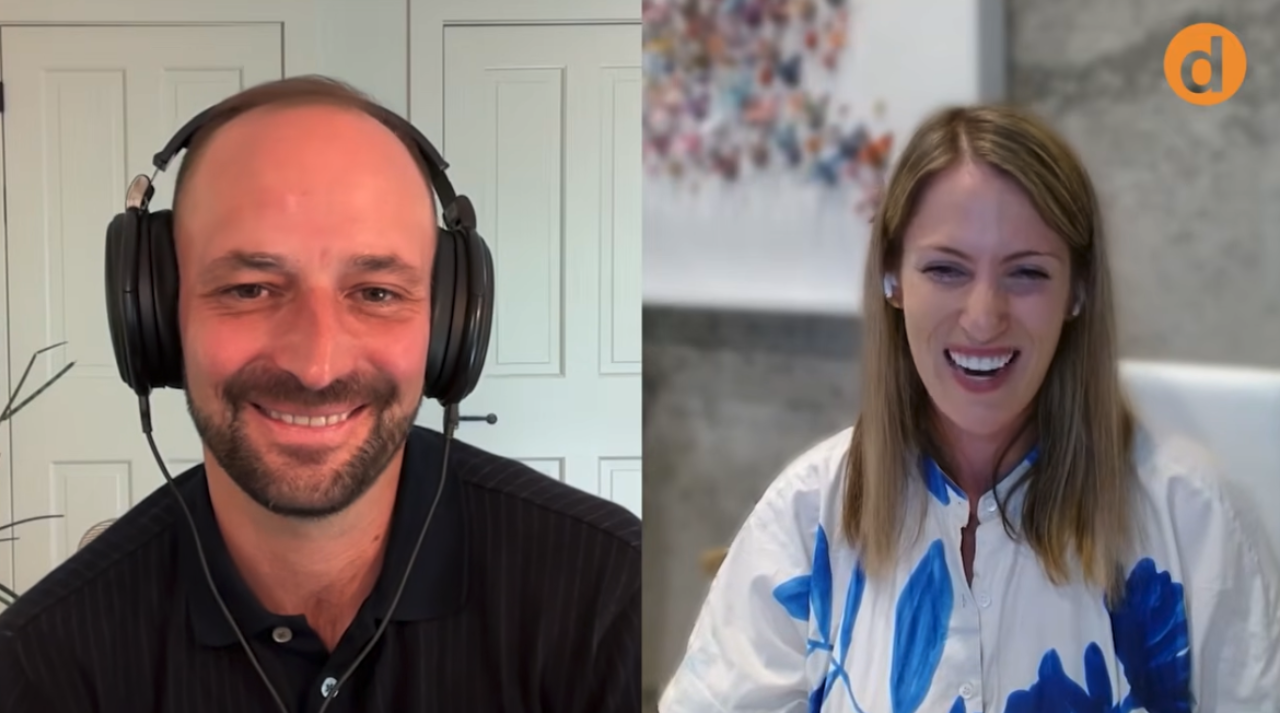
Danielle Bayer, Evidence Action’s CEO, took that question to Devex’s Michael Igoe on a recent episode of the Theory of Change podcast. The conversation spanned an hour and covered a lot of ground. Three themes stood out.
Governments own what lasts. Our next chapter starts with co-designing programs alongside government partners, guided by three questions: Is it cost-effective? Is it a government priority? Who will pay for it at scale? Danielle described seeing this in practice in Zambia, where officials from the Ministry of Health down to the clinic level spoke of our syphilis and HIV dual testing program as their own. In Liberia, all 15 counties have now transitioned from our syphilis program to government delivery.
Honesty is part of the evidence. This year, we shared about how our monitoring had overstated how many people were using chlorine dispensers in Kenya, Malawi, and Uganda. We said so publicly, acknowledged our own mistakes, and began scaling back Dispensers for Safe Water. The decision drew both praise and criticism, and Danielle was candid about both. She also described what comes next: tighter safeguards across our portfolio, including outside expert review of higher-risk programs, and sharing what we learned with other organizations that are piloting chlorine dispenser delivery.
Go slower to go fast. As new philanthropic capital looks for big ideas, Danielle encouraged funders to separate what is ready to scale now from what needs one or two more years of evidence. School-age anemia treatment, she said, is one area where we are closing an evidence gap before scaling.
“It actually makes sometimes sense to go a little slower in order to go fast,” Danielle said.
She closed by thanking our team members, some of whom carry a ladder up mountain paths where the road ends to keep chlorine stocked.
Funding is shifting, and donors will want to know which organizations can turn evidence into results. We aim to be one that tells you what’s working, what isn’t, and what we’re doing about it, while building programs governments can carry on after our support ends.