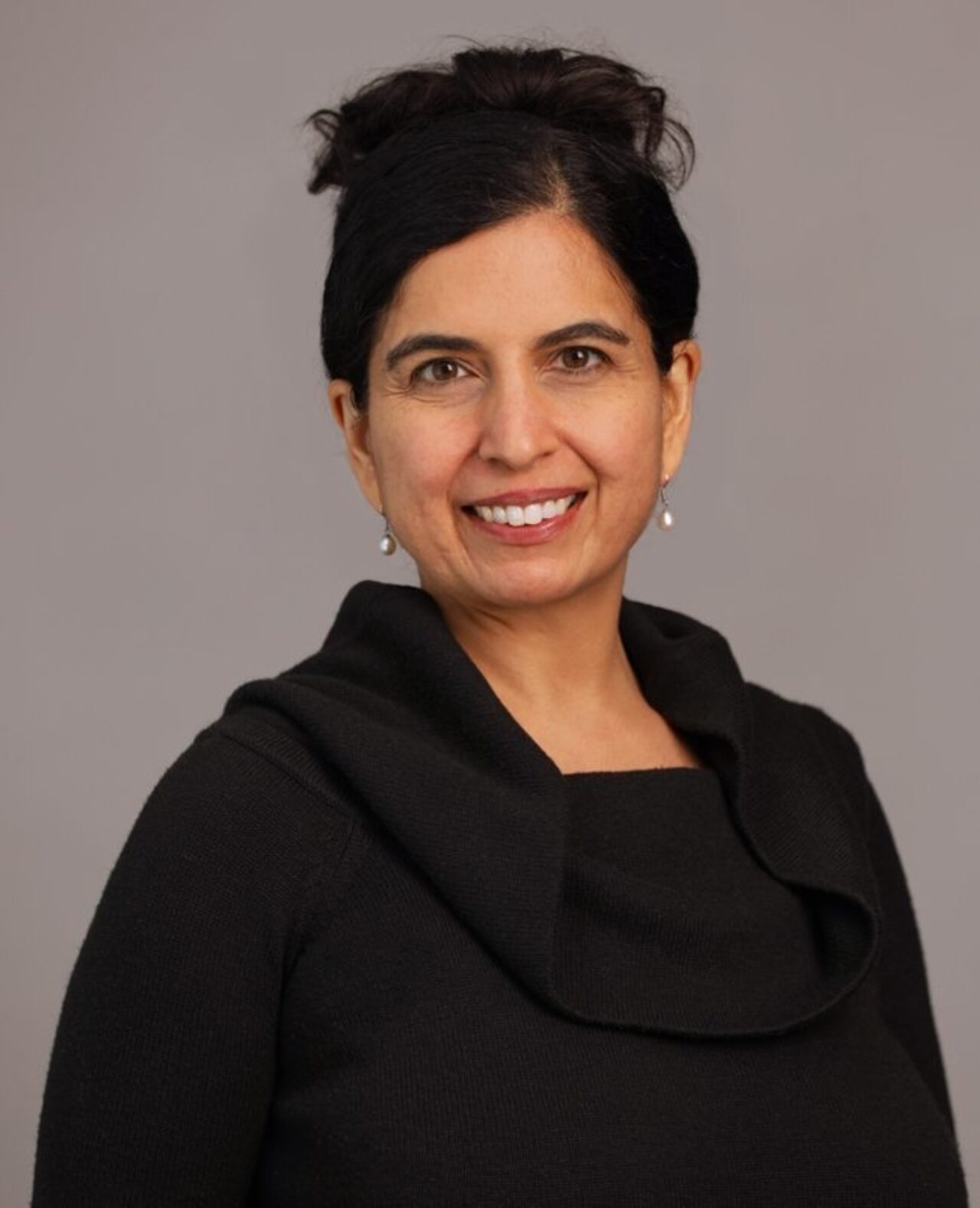
Today, I am stepping down as CEO of Evidence Action with enormous pride – and enormous gratitude.
When I joined Evidence Action in 2017, the organization was three years old. With our assistance, India had just launched National Deworming Day, and we were learning in real time what it takes to drive sustained safe water adoption at scale. The programs held real promise — but our fast growth had created pressures. Several of our programs were running meaningful deficits, with little donor pipeline to speak of. Meanwhile our new program development hadn’t yet translated to a program with scaled reach. The question was not just what Evidence Action could achieve, but also whether it would survive long enough to find out.
Nine years later, the answer is clear — and I am incredibly proud of the impact this team has driven. We set an ambitious goal of doubling our impact over 5 years — and achieved it, reaching more than 530 million people to-date across 11 countries and saving more than 10,000 children’s lives. Along the way, we made the choices together that turned a promising but precarious organization into an institution: stabilizing the financial foundations, building a new strategy and health-forward vision, and creating the Accelerator — a first-of-its-kind infrastructure for finding and scaling the most cost-effective health interventions in the world.
Over nine years, I have come to believe the world’s most neglected health problems don’t suffer primarily from a lack of solutions. They suffer from a lack of ownership. The interventions exist. The evidence is strong. What’s often missing is an organization willing to take responsibility for the entire problem – from identifying the most cost-effective approach, to building the partnerships needed to deliver it, to holding itself accountable for results at meaningful scale. That is what Evidence Action does. We serve, in essence, as general managers for some of the world’s most solvable and neglected health challenges.
What does that look like in practice? Each of our programs began the same way: a proven solution that wasn't reaching the people who needed it, and a decision to own the problem.
We did not invent school-based deworming, but we took responsibility for delivering it at scale — supporting more than 2.4 billion treatments across Africa and India and generating an estimated $23 billion in productivity gains. At its height, Deworm the World was reaching more than 280 million children annually, roughly a quarter of the world's at-risk population. In Kenya, worm prevalence fell by more than 80% over five years. In parts of India, it dropped by over 90%. As prevalence fell and government partners took ownership of delivery, we stepped back — by design. The goal was never to run the program forever. It was to make ourselves unnecessary.
To reach the 2 billion people who still lack safe water, we developed a portfolio of solutions for varying levels of infrastructure: Dispensers for Safe Water, reaching about 8 million people across rural Africa; in-line chlorination, brought to India in partnership with the Jal Jeevan Mission and state governments to potentially reach hundreds of millions; and a voucher-based approach now piloting through health systems to expand access further. Meanwhile, we sought to bring much-needed resources to this neglected space. A decade ago, I was hard-pressed to persuade funders to invest a million dollars in water treatment. Today, India's Jal Jeevan Mission, in partnership with Evidence Action, has driven a 22 percent increase in Finance Commission investments toward water, sanitation, and hygiene — a $20 billion increase in purpose-restricted funding to rural local bodies. GiveWell alone has invested over $150 million in the sector — much of it to Evidence Action — and is now expanding its water grantee portfolio, informed in part by our learnings. Safe water is now recognized as one of the most cost-effective interventions in global health.
And now, we are bringing the model to its newest frontier. Congenital syphilis causes 220,000 stillbirths and neonatal deaths annually — most of them preventable with a single test and same-day treatment during routine antenatal care. Despite the simplicity of the solution, no one had taken on the challenge of delivering it through health systems at scale. We decided to. In Liberia, we helped raise the national screening rate from 7 percent to 88 percent, saving more than 1,000 newborn lives. In Zambia, we doubled the screening rate, saving over 2,600 lives. We are now building a coalition with an ambitious goal of eliminating maternal syphilis across 20 high-burden countries, targeting 60 percent of the global burden — an initiative that could avert an estimated 200,000 adverse birth outcomes annually, including 85,000 stillbirths and neonatal deaths.
To me, this is Evidence Action working at its best: identifying neglected, deeply cost-effective areas, building the partnerships to deliver solutions at a global scale, and staying close enough to the last mile to know whether they’re working — from the chlorination device at a water tap in India to the screening rate at an antenatal care clinic in Liberia. That is the model I am proudest of building, and it has never been more needed.
I am stepping down with enormous gratitude — to a team that combined deep mission commitment with genuine rigor, and to the partners, funders, and government counterparts who believed in what we were building before the results were guaranteed. Two partners deserve particular recognition. GiveWell, under the leadership of Elie Hassenfeld, made foundational investments in Evidence Action from the start — funding not just our at-scale programs but the organizational infrastructure and new program development that unlocked our impact at scale. And Michael Kremer, whose pioneering research on deworming and water treatment and powerful engagement with governments laid the foundation for much of what we have built.
I will continue as a senior advisor to Evidence Action and remain on the Board of Directors.
I am stepping into a new chapter: leading the AI Access Initiative (2AI), incubated at Evidence Action, dedicated to ensuring AI's benefits reach tens or hundreds of millions of people living in poverty across the Global South. The problems I have spent my career on — access to healthcare, clean water, basic nutrition — remain vast and under-resourced. AI has real potential to change that calculus: reaching patients in settings where health workers are scarce, giving smallholder farmers high-quality personalized agronomic and weather guidance that was previously unavailable, delivering improved diagnosis through government systems at near-zero marginal cost. While the technology is new, the pathway to impact isn't — and right now, many of the most promising AI-enabled big bets in the Global South require a general manager: taking responsibility for identifying the highest-potential use cases, building the government partnerships that make delivery work at global scale, and staying accountable to results at the last mile. That is what the AI Access Initiative is building.
Evidence Action is in extraordinarily good hands. Danielle Bayer brings a rare combination of strategic ambition and deep care for the mission — and I have seen both in action, every day, since she joined in February 2025. Her growth mindset, her courage on difficult decisions, her commitment to hearing the people closest to the work and then pushing the organization further — these are the qualities of an exceptional leader. I could not ask for a better person to carry this work forward.
I have every confidence that the best years of this organization are ahead.
Thank you for being part of this story — and for what comes next.
Kanika